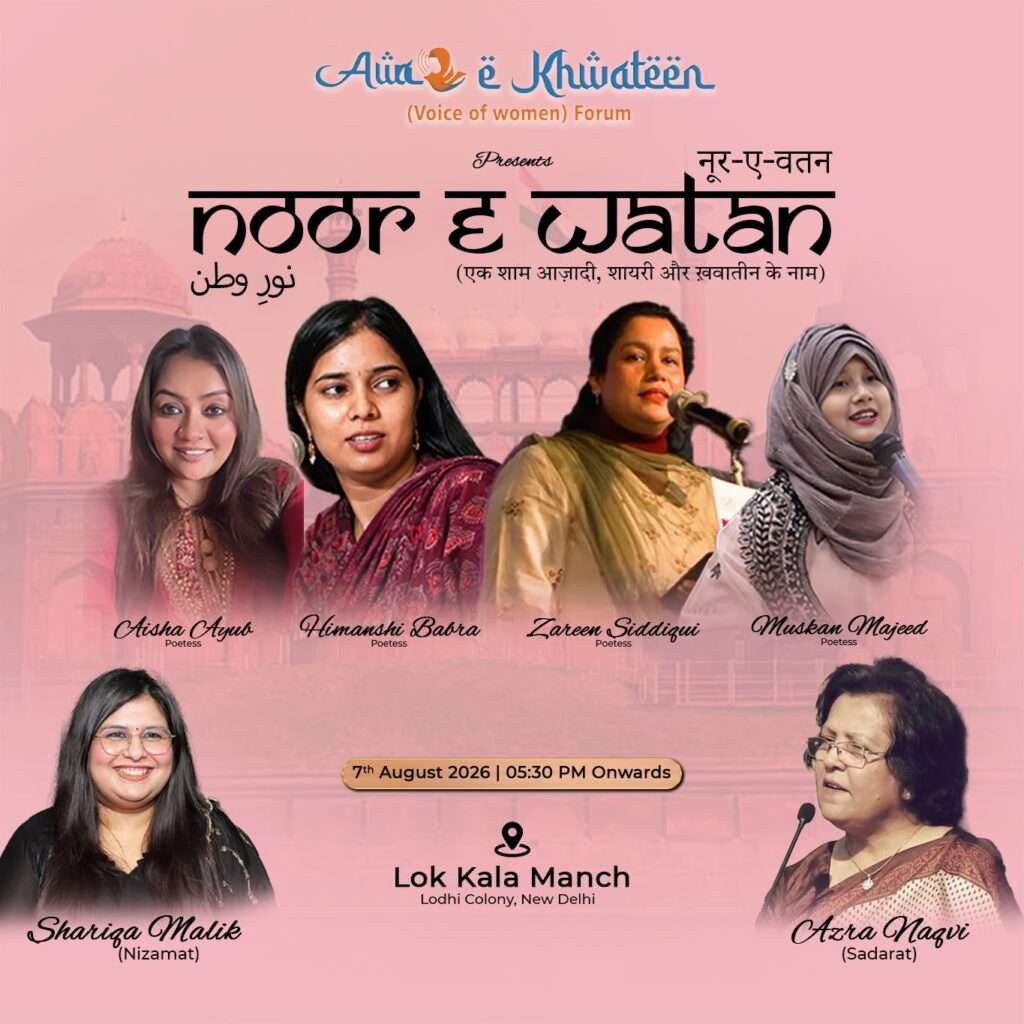
By Hiba Zafar| Awaz-e-Khwateen

The daughters of India created history and great buzz at the global level by winning the Women’s Cricket Team’s recent World Cup victory on November 2, 2025, which is a monumental and proud moment that has been added to the national sporting history. Women in Blue, commanded by Harmanpreet Kaur, Smriti Mandhana, and Jemimah Rodrigues, have become the most loved and accepted, as they are the embodiment of pride, resilience, and gender equality in sports. Their victory has been the vehicle that has taken women’s cricket to the forefront of the nation and has, in effect, lit the way for a whole new generation of girls to dream without limits. Today, young athletes from villages and small towns, as well as the cities, can see these women as their role models who have shown that talent, hard work, and determination are powerful enough to break the glass ceiling. What touched the heart deeply was the fact that men all over the country were as happy and thrilled with the women’s team victory as the women themselves-a true mirror of the changed mindset and the increased respect towards women in sports. It is more than a sporting achievement; it is the celebration of the evolving spirit of India, where women stand tall in every field.
For decades, Indian sports were mostly regarded through male prism, and stadiums were filled with male coaches, players, and even audiences for male teams. But women have been making their story quietly and relentlessly. Women with their presence in the national pride as symbols and not pushed to the periphery anymore. In the past, Indian women were subjected to a strong social restriction on their involvement in sports. Historically, women of India faced deep-rooted societal constraints that limited their participation in sports. Patriarchal norms, lack of infrastructure, and minimal media coverage kept female athletes on the margins. However, the situation changed after independence, and the first woman to break the stereotypes was such champions as P.T. Usha, Karnam Malleswari, and Mary Kom, who gained recognition on the international arena. The small group who had the strength to do so, were Kamala Kameshwar, Mary D’Souza and Nilima Ghose (the first woman Olympic in 1952 in India) did it courageously out of time. Without sponsors, proper equipment or recognition, driven purely by passion. They worked hard to pave the way to the generations that came after them. The success of these activities triggered policy changes, funding and grassroot mobilisation.
The Turning Point: 1980s to 2000s from Inspiration to Institutional Support, the quiet revolution of the 1990s and 1980s. It was a household name “The Payyoli Express”, PT Usha, after almost winning a medal in the 1984 Olympics in Los Angeles. Her success was a catalyst of a new discussion. This was followed by Karnam Malleswari, the first woman Olympic medallist of India with a bronze medal in the 2000 Sydney Olympics in the weightlifting event, not only she lifted the weights but also the spirit of the country. The last two decades have seen an unparalleled increase in the number of women being involved in sports activities across India. Such government campaigns as “Khelo India”, “Beti Bachao Beti Padhao”, and state-level sports scholarships have been significant contributors. Sponsorships by corporate entities and NGO programs have also begun to realize that sports is a weapon of empowerment. This was when Indian women began to become popular in sports such as tennis, hockey, shooting and athletics. Anju Bobby George, Sania Mirza and Saina Nehwal, Stand Sindhu, Hima Das, Lovlina Borgohain, Mirabai Chanu, and Smriti Mandhana Harmanpreet Kaur are not only tall in terms of their performance but also in terms of what they signify: they represented the new India, which was confident, ambitious and elite.

The rise of women athletes in Jammu and Kashmir, perhaps is one of the most astonishing changes in recent years -a region where social conservatism, conflict, and poor infrastructure have always been limiting factors to women taking part in the social life. The concept of girls going to national tournaments or even sports in open fields was unimaginable in the Valley, in several regions decades ago, due to the issue of cultural stigma, safety, and fear of a social backlash. However, the awakening was the realization, educating, and increasingly high levels of aspiration of the conscious young Kashmiri girls, a revolution started.
Now, Kashmir girls are doing well in such fields as football, martial arts, cycling, skiing, and cricket. Such figures as Afshan Ashiq, who used to be recognized as a leader of the street protests, have changed her life with football and is currently a captain of Jammu and Kashmir football team of women players. The first female wheelchair basketball player in the region, Insha Bashir, has made out of misfortune victory following a spinal injury and has since become a national-level competitor and an inspiration to others. This change in the culture of sports in Kashmir has not occurred in a vacuum; the local sports councils, Non-Governmental Organizations, as well as schools, have been actively involved in promoting the efforts of female involvement. Programs like the Mission Youth, the J&K Sports Council, and the Fit India campaigns have offered organized training, gear, and enclosed areas where the girls can play.
Challenges That Remain: There are numerous challenges, even though some progress has been made. There are infrastructure deficiencies, gender discrimination in sports bodies, media reporting, and unequal wages, which are some of the primary concerns. Competitive sports activities among girls continue to be barred by social resistance in rural regions as well as in conflict-prone regions. The Indian woman in sports is a journey that reflects the entire narrative of “Women’s Empowerment” who have struggled, been courageous, and have succeeded. What has started as a small group of strong-willed pioneers has since grown into a national movement of power and hope. Indian women are redefining the meaning of being powerful and invincible, whether they are on Olympic podiums or scruffy village fields.