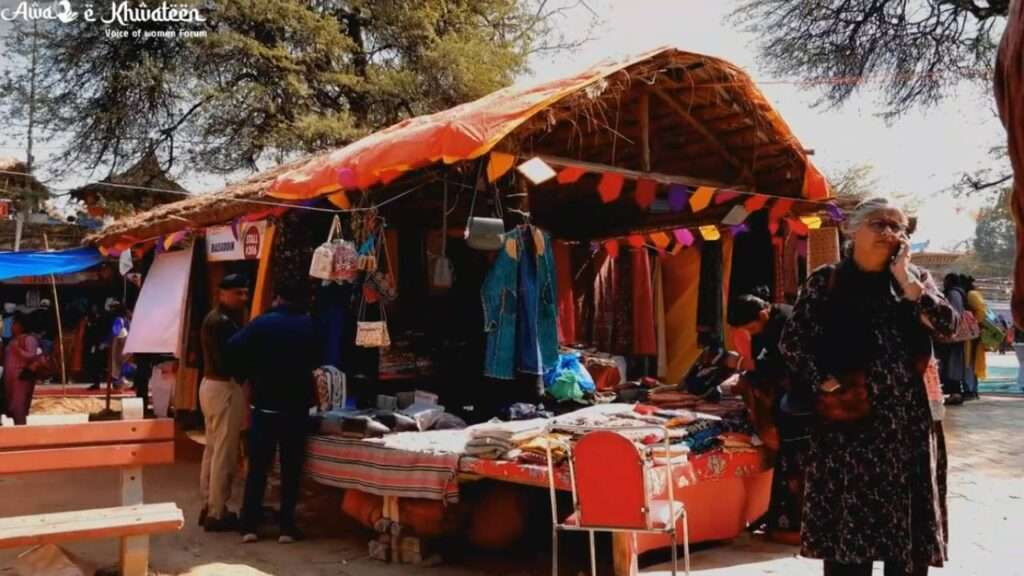
Surajkund Mela, emphasises its evolution from a national art and craft fair into a significant platform for women’s empowerment, identity, and equality. Originally started in 1987 to promote Indian arts and crafts, the mela gained international recognition by 2013. Over the years, it has transcended its initial cultural purpose to become a symbol of opportunity, gender equality, and social change.
Key Highlights:
• Surajkund Mela’s Origin and Growth
• Transformed into a broader platform representing women’s work, identity, and empowerment.
• Women’s Role Beyond Traditional Perceptions
• Women are depicted not just as workers but as creators, entrepreneurs, and leaders.
• The mela showcases women actively participating with family support, including husbands and daughters, illustrating changing societal mindsets.
• Examples of family members standing shoulder to shoulder symbolize the importance of support systems in women’s progress.
• Voices from Participants
• Artisans and entrepreneurs from various regions (e.g., Kurukshetra, Gujarat) share their work, predominantly in hand-block printing, Kalamkari kurtis, sarees, and dresses.
•They emphasize handcrafted, self-produced, and self-marketed products, highlighting women’s direct involvement in the entire production chain. • Core Message of the Platform “Awaz Khawateen”
• The organization behind this narrative, Awaz Khawateen, stresses that women require not only a platform but also respect, support, and equality.
• Their stories reflect the power of family and society standing together to bring about change.
• The voice represented is not just a female voice but a voice for equality.
The mela is much more than an art fair; it serves as a catalyst for social change, especially in redefining women’s roles and breaking stereotypes. Family and Community Support as Crucial Elements
Women’s success stories at the mela are deeply intertwined with the backing of their families and communities, reinforcing that empowerment is a collective process.
Core Message of the Platform “Awaz Khawateen”
• The organization behind this narrative, Awaz Khawateen, stresses that women require not only a platform but also respect, support, and equality. Their stories reflect the power of family and society standing together to bring about change. The voice represented is not just a female voice but a voice for equality.