Yusra Siddiqui| Awazekhwateen
When India became independent in 1947, the hope of equality spread everywhere. The new nation hoped to eliminate not only colonial rule but also the social hierarchies that kept people at very lower level. Many social movements took place and many reform happened but many groups like Pasmanda women (the women belonging to the backward and Dalit Muslim communities) the journey towards dignity, equality and justice remained painfully slow. Their story is barely told, outdone by larger narratives of religion, identity, and gender and it is considered a concept of intersectionality. But within the huge canvas of India’s social history, the fights and struggles of Pasmanda women deserve a central space, because they highlight the deep intersection of caste, class, and patriarchy within the Muslim community itself.
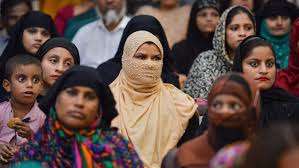
The word Pasmanda, mean “those who have been left behind,” perfectly describe the way how these communities have been pushed to the ends of society. While Muslim identity in India is imagined as a single religious group, reality is far different. Even in Muslim communities, caste divisions is dominant, For e.g. Ashraf (upper-caste), Ajlaf (backward caste), and Arzal (Dalit Muslims). Pasmanda women belong mostly to the last two categories. They traditionally worked as weavers, tailors, butchers, washerwomen, embroidery workers, sanitation workers, and artisanal labourers. These type of occupations placed them in the lowest social ranks, both within the Muslim community and in Indian society at large scale.
Since independence, We are witnessing that Pasmanda women have lived at the intersection of multiple vulnerabilities which may be called as triple oppression. As women, they faced patriarchy, they tested marginalization, and as part of backward or Dalit castes, they suffered social exclusion from within their own community. Economic difficulties defined their life long hours of unpaid or underpaid labour, dependence on male members, and very limited access to land, wealth, or low income. Many worked tirelessly in activities such as weaving , but their labour remained invisible, their skill underrated, and their earnings insignificant. Slums in Urban and poor rural localities became the spaces where Pasmanda women carried their everyday fights, often with slight support from the state or community institutions.
Education which could have been a path to freedom and growth mainly remained distant. Schools were either not accessible, or families prioritised household work and marriages at early age over girls education. Among the Muslim women who already face educational ad economical gaps, Pasmanda women were the most deprived. Their literacy levels stayed far below national averages for many years. This lack of education not only limited their opportunities but also resulted their unawareness about legal and fundamental rights, welfare schemes, and paths for upward mobility. And the consequences is that, even when laws were made to provide protection to women, Pasmanda women often did not know how to benefit from them.
Political invisibility has also been striking of Pasmanda women . Most platforms that claim to represent Muslim voices like religious boards, political parties, cultural organisations have been dominated by upper caste Muslim men. In these centre, Pasmanda concerns hardly entered in this conversation. Many issues such as domestic violence, inheritance rights, livelihood support, or caste discrimination were often remained aside, leaving these women ignored. Their silence was not a choice but this is a reflection of systems that never permitted them to speak.
In contemporary period, discussions and debates on Muslim women’s rights have become more visible with the discussions around triple talaq, maintenance and family law reforms. Yet even these debates often forget the situation and condition of Pasmanda women. For e.g., the Supreme Court decision about banning instant triple talaq was welcomed as an important decision toward gender justice and equality, but its result remains low for women who cannot easily approach courts or afford legal help and support. The huge gap between law and lived reality continues to grow for those who lie at the intersection of gender and caste marginalised.
It is in this way that the debate around the Uniform Civil Code (UCC) has become both complicated and important. Many claim that a common civil law could help guarantee equal rights in many areas like marriage, divorce, inheritance, and property. And for marginalised group like Pasmanda women, who get even less than what Muslim personal law traditionally allows, a uniform civil law might create opportunities for equal treatment. But some believe it could independent them from patriarchal interpretations of religion controlled mainly by Ashraf elites.
Though, the story is never this simple. With time, Pasmanda activists have raised vital concerns- Will a uniform civil law truly help in equality, or will it impose the norms of the majority? Will it talk caste based discrimination within Muslim communities, or make it unseen? Will the state use UCC as a tool of reform, or as a political tool? And importantly, can legal reform alone change the lived realities of women who lack in education, income? These questions show that while Uniform Civil Code may offer possibilities but it is not a complete answer. Empowerment must begin with establishment social and economic foundations education, livelihood, representation, and community awareness.
After the hardship and struggle, the life of Pasmanda women is also filled with strength and resilience. Women from many muslim communities like weaving in Uttar Pradesh, sanitary workers in Bihar, and artisans in West Bengal have started organising themselves, forming collectives, and demanding acknowledgement. Activists, Ali Anwar (founder of Pasmanda Muslim Mahaz) brought the word Pasmanda into national debates, open the space for voices that had long been stifled. Gradually, Pasmanda women are demanding their identity, declaring their rights, and questioning the social structures that shape their lives and status.
As present day, as India continues to discuss gender rights, minority rights, and legal rights, the condition of Pasmanda women should be placed at the centre not as a footnote in Muslim women’s issues, but consider it as an essential part in India’s journey toward justice and equality. Their lives prompt that equality and justice cannot be achieved by law alone, it requires disassembly caste structure, redefining community leadership, creating equal economic opportunities, and ensuring that every woman regardless of caste, class, community,
has the power to speak and to shape her future. The life of Pasmanda women is a story of struggle, survival, silence, and slow but firm change. It is a reminder that real independence is not just the freedom of a country but the freedom of those who have been left behind for decades. As we move forward, their voices and problems must not remain on the margins they must be brought to the core of every conversation and debates about reform, justice, equality and dignity.