Tooba khatoon | updated by Yusra siddiqui | Date- 28-02-2026 | awazekhwateen
Hashima Khatoon, 50 years old lady living in the developed city of Bihar, Patna in a bakko community, wakes up in the early morning with her daily routine to beg and collect the used and discarded clothes of the people which are no longer in use or of dead people which is wore by hashima’s family. Doing her daily routine with no hope of moving forward in the life, no holidays, and dreams of going beyond that community or area of Patna where her caste is known as ‘BAKKO’.
At same time her daughter NIKHAT who is barely 14-15 years old wakes up with her familiar routine of cleaning, cooking, and doing household chores for sustenance of the family. NIKHAT, who studied till 5th fluent in her language wants to study further but her family denied because of the need of helping hand in domestic work and financial issues.
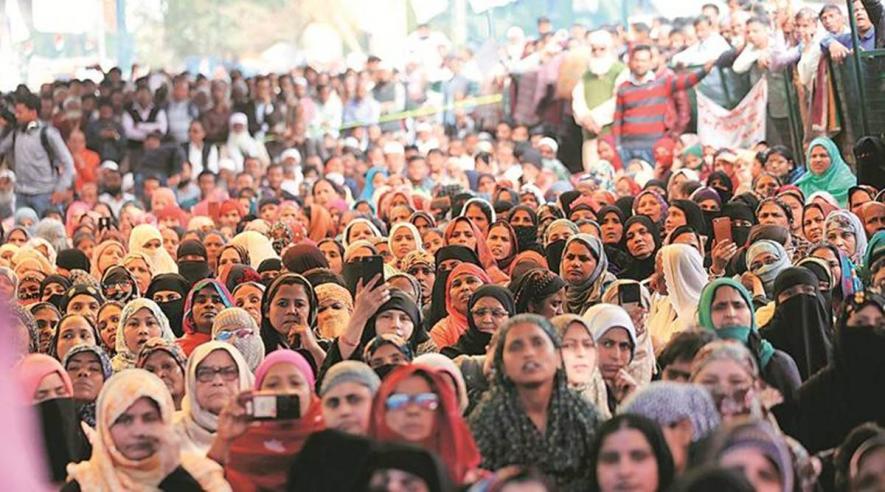
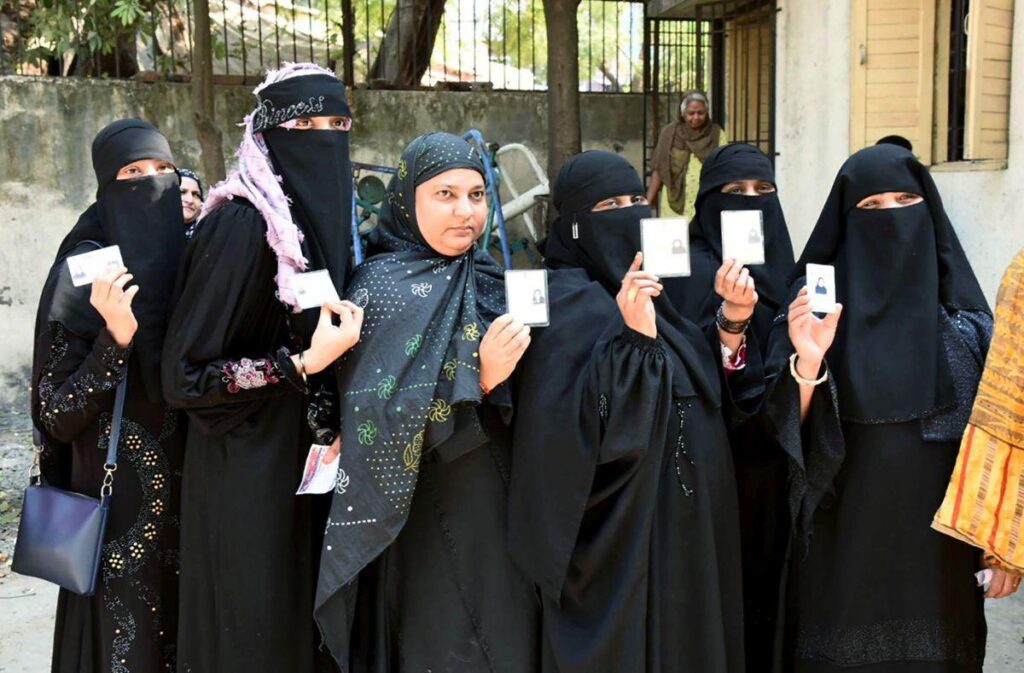
WHO ARE THESE WOMEN?
The above two stories are showing a very minute image of PASMANDA women an invisible who are living in different parts of the country. The term Pasmanda originate from a Persian word meaning, ‘those who have fallen behind or left behind. In India pasmanda is being used as an umbrella term for the low caste people or community who got converted to Islam in a later period of Mughal times. These people who previously included in the Shudras category of Hinduism is being shifted to SC community which comes at the bottom hierarchically.
HISTORY OF PASMANDA COMMUNITY
With the advent of Mughals in India Muslim class was divided into the ‘ASHRAF’ and ‘AJLAF’ categories. Basically, Ashraf were the people who were born in a noble, elite or high birth families. Ashraf majorly includes four caste SHAIKH, SAYYED, MUGHAL, PATHAN. The high-class Hindus who converted to Islam later is also being included in the upper class because of their status and wealth. The categorization is also depended on the occupation of the family. AJLAF Muslims on the other hand are the rest of the Muslims who are considered as low born, not financially good enough to be fitted in the upper-class society and the converted low class Muslim people. Pasmanda communities includes such as THE ANSARI, QURESHI, MANSOORI, SAIFI, and others who are being have traditionally been associated with artisanal, labour-intensive, or service-based occupations.
Pasmanda comes under Ajlaf and particularly the Shudras people who got converted or comes at the lowest strata in the imagined hierarchy of Muslim community. When we talk about the pasmanda people, according to the Sachar Committee’s report, 40% of Muslims in India are OBC or Scheduled Castes and Scheduled Tribes. Till now India have not conducted a census in which only pasmanda are being counted and surveyed seperately. Muslims have been listed as a distinct, singular bloc in every official census to date, including the last one in 2011.
PASMANDA WOMEN: THE INVISIBLE WITHIN THE INVISIBLE
Pasmanda women takes a position so marginalised and bottom that it is hard even to imagine to takes a step forward and leave that tag and uplift themselves, it often escapes the mainstream conversation among the people or in the society. When we speak about women’s rights, the words and its meaning keep importance for the educated, upper-class, well-off women who are politically and socially active and barely know about the condition of pasmanda women. Speaking to pasmanda women these words such as EMPOWERING WOMEN, WOMEN’S RIGHTS, WOMEN’S VOICE, DISCRIMINATION, EQUALITY are vague for them not because they do not know about these all instead due to the prioritisation of ROTI, KAPDA, MAKAAN. When people do not have a roof to shelter, food to eat and clothes to even cover ourself all the other things in the world looks useless. And when discussions focus on Muslim women, the narrative is dominated by elite Ashraf voices and issues like hijab or personal laws, which rarely reflect the lived experiences of Pasmanda women. Their labour remains undocumented, their challenges unaddressed, and their voices unheard. They are invisible within national policy debates, invisible within feminist movements, and invisible even within the Muslim community’s own leadership structures. This layer of invisibility switched pasmanda women from omnipresent in the form of domestic workers, artisans, rag-pickers, or home-based labourers to not recognised anywhere. Their stories, like that of Hashima and Nikhat, reveal the truth that being a Pasmanda woman does not just mean being marginalised; it means being unseen even among the already unseen.
THE PRESENT REALITY OF PASMANDA WOMEN-
Contemporary reality of pasmanda women is been shaped by combination of multiple factors of discrimination and stereotype in historical aspect, caste-based exclusion, gender-based discrimination, and economic vulnerability which carves the life of pasmanda women into not less then hell on earth. The economic opportunity for these women are limited and in those limited opportunities these women are being exploited by paying less then they actually deserved, long hours of overtime, long hours of work with no or very little breaks in between, employing their children in the lure of some extra money and much more which Is impacting the women diversely and severely. These women are being engaged in informal work such as beedi rolling, zari and embroidery, domestic labour, rag-picking, and small home-based piecework that offers no security or recognition.
WHY PASMANDA WOMEN REMAIN MARGINALISED
Pasmanda women suffer the most because they lie at the intersection of caste, gender, and poverty and their identity is unrecognised by both the state and their own community. Some of the major factors behind marginalisation are as follows-
- Triple Disadvantage: Gender + Caste + Poverty.
- Dominance of Ashraf Voices in Education, Politics, and Institutions.
- Absence of Pasmanda-Specific Data or Census.
- Social Silence Around Caste in Muslim Community.
- Lack of Educational Access & Early School Dropouts
- Non inclusion of pasmanda people in SC policies of the nation.
- Concentration in Informal, Exploitative Work.
What Pasmanda Women Need :
Pasmanda women need opportunities that recognise both their struggles and their strengths. Their first and most important need is access to quality education, not only for young girls but also for women who were forced to leave school early. Skill training, financial support, and safe working environments can help them move out of exploitative, low-paid jobs and build more secure futures. They also need healthcare services that reach their neighbourhoods, especially in areas where basic facilities are still missing.
Equally important is representation—spaces where Pasmanda women can speak for themselves and be heard. Whether in local committees, community organisations, or larger policy discussions, their presence can shift how decisions are made. Caste discrimination within the community must be acknowledged openly so that real change can begin. When policies and welfare schemes are designed with their specific realities in mind, Pasmanda women can finally move from the margins to a place of dignity and visibility.
CONCLUSION: The lives of women like Hashima and her daughter Nikhat are not isolated stories; they mirror the everyday experiences of countless Pasmanda women across the country. Their struggles are quiet, constant, and often hidden behind the noise of larger national debates. For too long, their identity has been wrapped in silence—unseen in policies, unheard in leadership, and unnoticed in public conversation.
To speak about women’s empowerment while ignoring Pasmanda women is to leave the foundation of our social progress incomplete. Their inclusion is not an act of charity but a step toward justice. When we recognise their labour, support their education, and bring their voices into decision-making spaces, we begin to reshape the story of empowerment in a way that is honest and inclusive. The future of women’s rights in India depends on whether we choose to look beyond the familiar and finally acknowledge the women who have been left behind for far too long.