Tooba khatoon | New Delhi | 20 May 2026
In a society that often celebrates education, urban progress, and modern lifestyles, one uncomfortable reality continues to persist quietly behind closed doors—dowry, domestic pressure, and gender inequality.
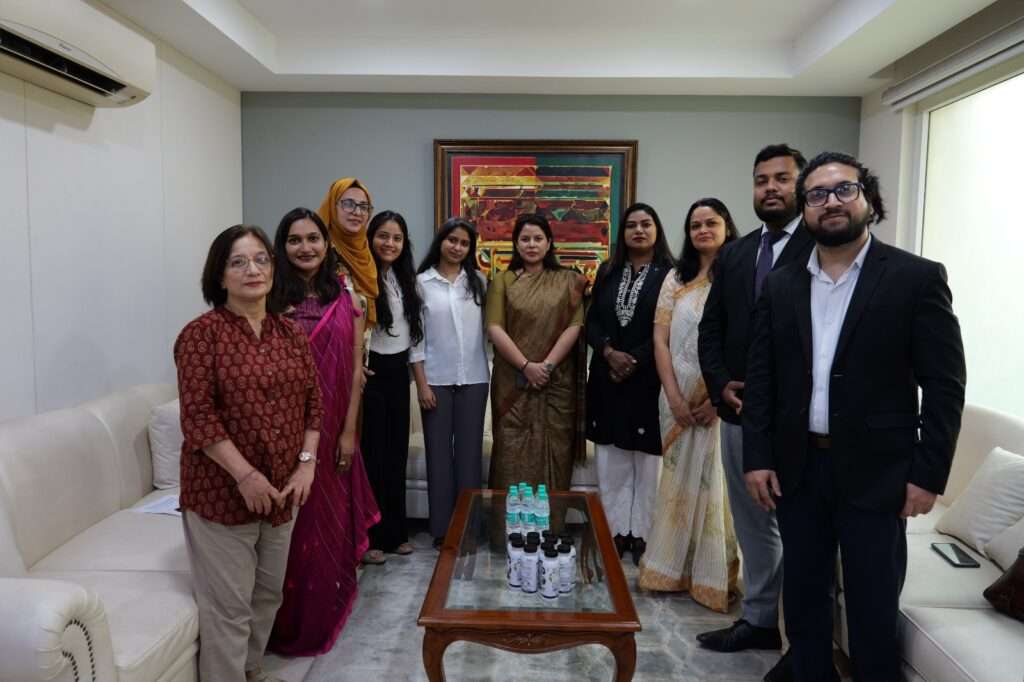
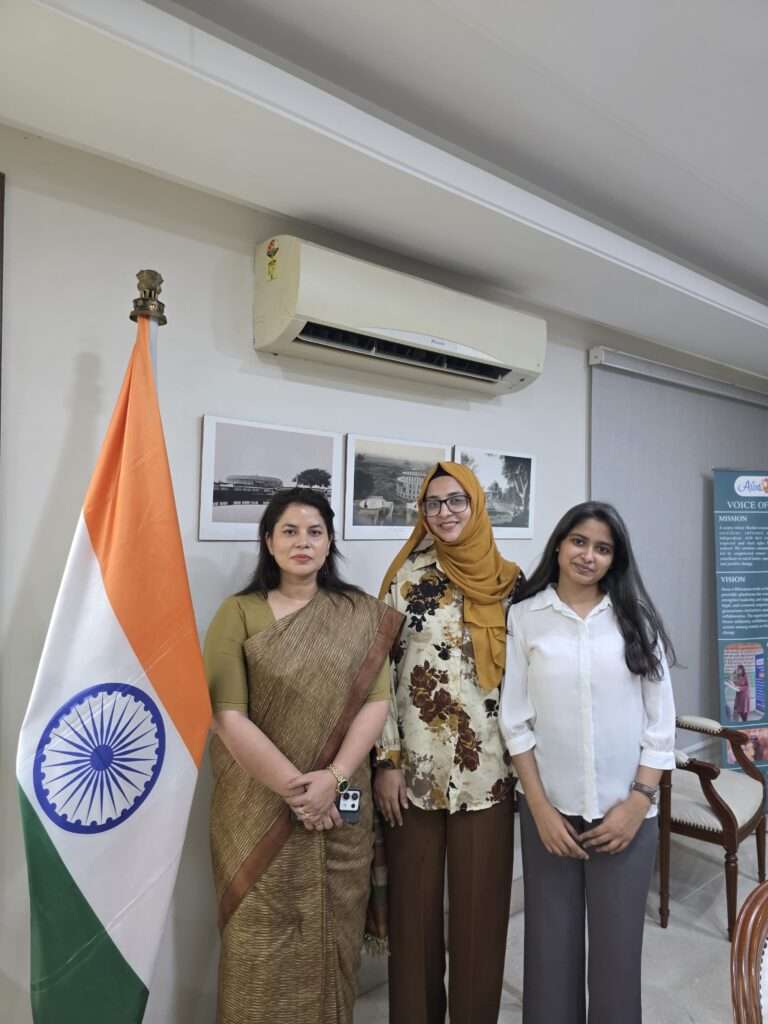
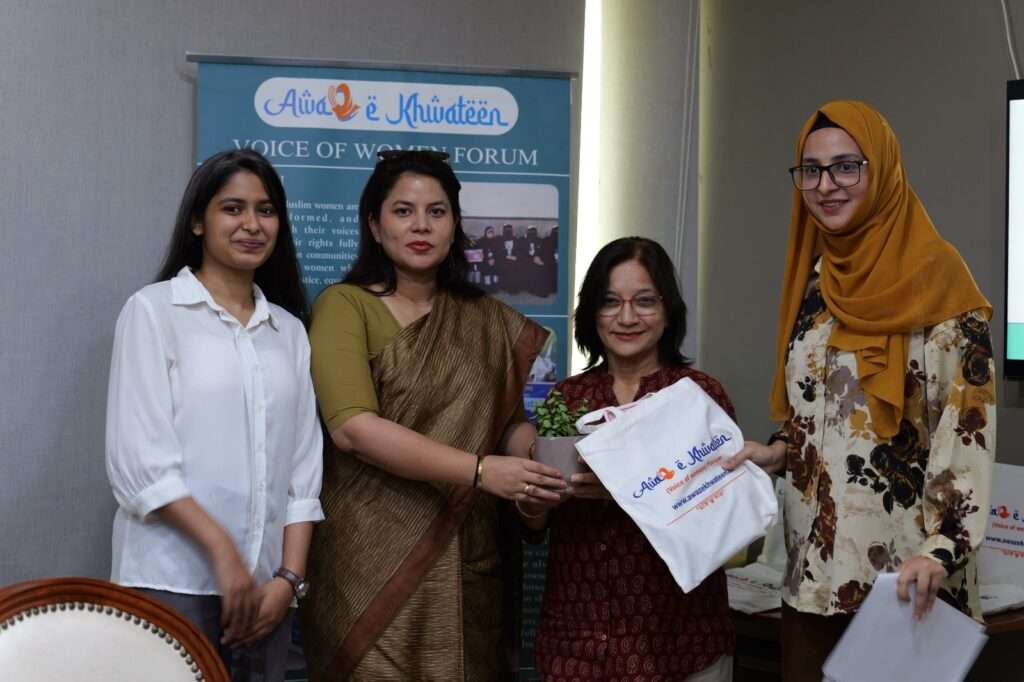
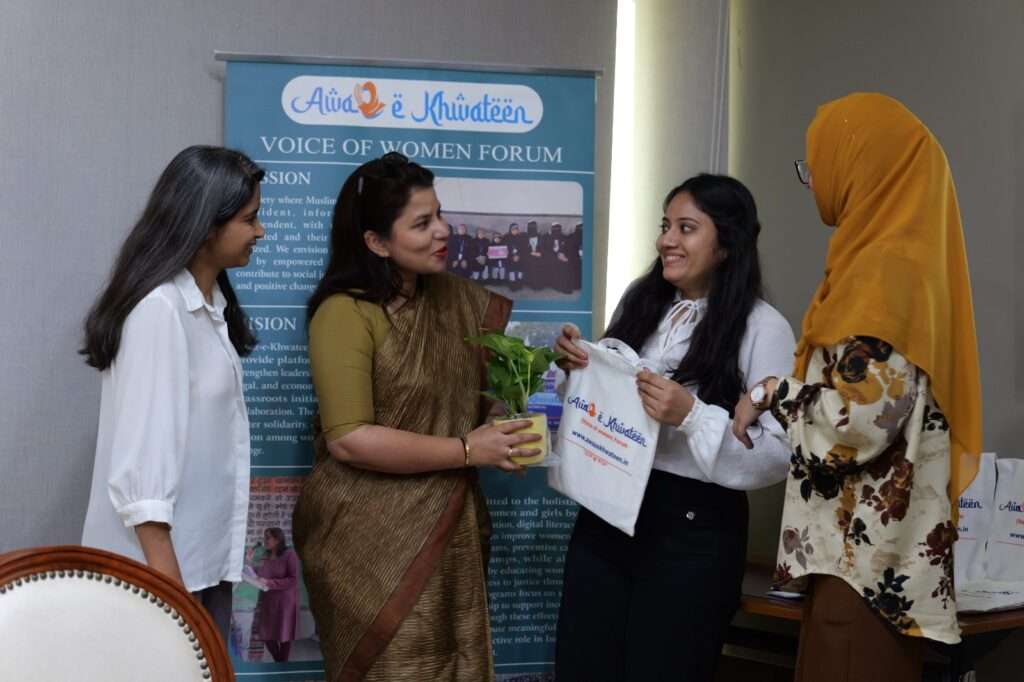
To address these difficult but urgent questions, AwazeKhwateen organised a powerful panel discussion on 20th May 2026, bringing together legal professionals, academicians, social advocates, and young participants for an honest conversation on dowry practices, educational empowerment, family structures, legal awareness, and the changing forms of gender discrimination in contemporary India.
Held under the guidance of Dr. Babli Parveen, Honorary Convenor, the discussion moved beyond awareness and challenged participants to think critically about the systems that allow injustice to survive despite legal reforms and social progress.
Moderated by Miss Yusra and Miss Tooba, the session created space for dialogue that was reflective, accessible, and rooted in lived realities.
The panel featured Adv. Ihsita, Adv. Yasmeen, Dr. Richa, Adv. Sourabh, Adv. Harsh, Miss Anchal, and Asha Khosa Ma’am, each bringing a distinct lens to understanding how gender inequality continues to evolve across homes, institutions, and public life.
Rather than treating dowry as an isolated legal offence, the discussion explored it as part of a broader culture of control, status, and unequal power.
Education Without Empowerment Is Not Enough
One of the strongest themes to emerge from the discussion was that education alone does not automatically create freedom.
Dr. Richa reflected on the difference between literacy and empowerment, emphasizing that women may achieve educational milestones yet still struggle to exercise agency when confronted with family expectations, social pressure, or abuse.
The discussion highlighted a difficult truth: knowing one’s rights and feeling empowered to act upon them are not always the same thing.
When Marriage Becomes Transactional
Speaking from a legal and social perspective, Adv. Ihsita drew attention to how dowry has increasingly become linked with ideas of status, lifestyle, and social validation.
The panel discussed how educational qualifications, professional success, and economic mobility—rather than reducing dowry expectations—sometimes become tools to justify higher demands.
Marriage, participants observed, risks becoming less of a partnership and more of a negotiated transaction.
The Invisible Weight Women Continue to Carry
Adv. Yasmeen focused on the barriers women face while reporting abuse and seeking justice.
The discussion examined how social pressure, concerns about family reputation, and attempts at forced reconciliation often discourage women from pursuing legal remedies.
Participants reflected on how many women are encouraged to “adjust” rather than being supported to seek safety and accountability.
Law Exists, But Access Remains Unequal
Addressing institutional challenges, Adv. Sourabh highlighted that legal protections become meaningful only when systems are accessible, responsive, and survivor-centred.
The discussion acknowledged that delays, procedural complexity, and limited awareness often prevent women from fully accessing the protections available to them.
Particular emphasis was placed on strengthening legal literacy among youth and communities.
Justice Requires Sensitisation, Not Just Legislation
Building on this, Adv. Harsh stressed that sustainable reform cannot happen through laws alone.
Police personnel, legal practitioners, institutions, counsellors, and communities must be trained to respond to cases of violence with sensitivity and accountability rather than stigma or mediation at any cost.
The panel noted that preserving dignity should never come at the expense of preserving appearances.
Changing Society Begins With Changing Conversations
Bringing in a youth perspective, Miss Anchal spoke about the role of younger generations in challenging inherited social norms.
She reflected on how patriarchy often adapts itself to modern environments—including social media spaces and consumer culture—and called for conscious resistance to everyday forms of discrimination.
Young people, she argued, have a responsibility not only to reject harmful practices personally but also to question them publicly.
Support Systems Matter
A significant intervention came through Asha Khosa Ma’am, who highlighted the importance of integrated support systems for women experiencing violence and discrimination.
The discussion explored the role of One Stop Centres (OSCs) and institutional mechanisms that provide legal assistance, counselling, medical care, shelter, and emotional support.
Participants were reminded that support structures are most effective when women know they exist and feel safe enough to access them.
Building Families Rooted in Dignity
Throughout the session, Dr. Babli Parveen emphasised that meaningful social reform begins within homes and communities.Families must move away from ideas of honour tied to financial exchange and instead nurture relationships built on respect, communication, and equality.
Miss Tooba khatoon and Yusra Siddiqui wrapped up the session with a called upon educators, parents, legal professionals, and civil society to collectively create environments where women are not expected to sacrifice dignity in the name of adjustment.
One of the most memorable aspects of the event was the active engagement from attendees.
Questions from participants transformed the discussion from a panel into a collective reflection on the realities many families continue to experience.
The event concluded with a shared understanding:
Dowry is not merely a legal issue. It is a social, emotional, economic, and cultural challenge. Ending it requires more than awareness—it requires courage, education, legal literacy, institutional support, and communities willing to question what has long been normalised.
Through this conversation, AwazeKhwateen reaffirmed an important belief:
Change does not begin when society becomes ready.
It begins when people decide that silence is no longer acceptable.