Story by Tooba Khatoon | New Delhi |
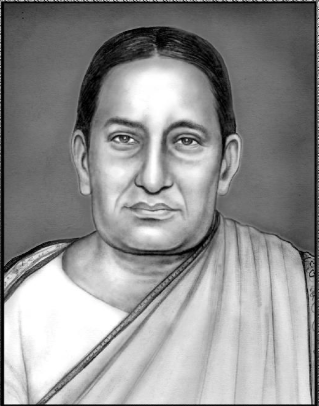
Some women entered India’s freedom struggle through political speeches. Some through protests, prisons and underground movements.
Baji Jamalunnisa entered it through books, questions, conversations and the courage to imagine a different society.
Born in Hyderabad in 1915, she lived through some of the most turbulent decades of Indian history and passed away in 2016 at the age of 101. Her life stretched from the final decades of colonial rule to independent India, and along the way she witnessed the Nizam’s Hyderabad, the nationalist movement, the Telangana struggle and the political and social changes that followed Independence. Yet despite living such a remarkable life, Baji Jamalunnisa remains largely unknown outside Hyderabad’s progressive and literary history.
Baji was born into a relatively liberal family in Hyderabad, but like many girls of her generation, her access to formal education was limited. She did not receive the kind of higher education that might have opened conventional professional opportunities for her. But she found another kind of education in books.
As a young girl, she began reading progressive literature and Nigar, a journal associated with Urdu literary and intellectual circles. Some accounts suggest that she encountered the publication when she was still in her early teens. For a girl growing up in the conservative social atmosphere of princely Hyderabad, this was not simply an interest in reading. These books introduced her to ideas about society, politics, inequality, colonialism and freedom. They encouraged her to question the world around her rather than simply accept it.
Her relationship with purdah became an important part of this transformation. Baji had grown up in a society where women’s movement and education were often restricted, but she gradually began challenging those boundaries. Around the 1920s, she stepped beyond purdah and entered a much wider intellectual and public world. This was not an easy decision. For women of her generation, leaving the protected boundaries of the household could mean facing criticism from family and society. But Baji increasingly believed that a woman’s life could not be limited to the domestic sphere. She wanted to read, discuss, understand and participate.
Her intellectual journey eventually brought her into contact with the progressive political and literary circles of Hyderabad. She became associated with people such as Makhdoom Mohiuddin, the celebrated Urdu poet, communist leader and revolutionary figure. Makhdoom’s politics and poetry reflected the larger progressive movement that was questioning colonialism, feudalism, class inequality and social injustice. Baji found herself increasingly drawn towards these ideas. Her political awakening was therefore closely connected with her literary awakening. She read first, she questioned next, and eventually she began to act.
Hyderabad during this period had a complicated political atmosphere. Unlike most of British India, it was a princely state ruled by the Nizam under British paramountcy. The struggle for political freedom therefore had its own particular character. Questions of colonial influence, autocratic rule, feudal power, class inequality and social reform became intertwined. Baji became involved in the progressive and communist movement that was growing in the city. Her political commitment continued despite opposition from sections of her family and in-laws. She was not content simply to discuss freedom in private; she wanted to participate in the struggle to create a society she believed would be more equal and just.
One of the most remarkable aspects of Baji’s life was the role her home played in Hyderabad’s intellectual culture. Her house became a meeting place where writers, activists and progressive thinkers could come together and discuss literature, politics and social change. She was associated with Bazm-e-Ehabab, a literary and discussion circle where subjects such as socialism, communism and social customs were debated. She was also connected with the progressive literary movement and the Progressive Writers’ Association in Hyderabad. These spaces were particularly important for women because they offered something that society often denied them a place to speak openly, exchange ideas and develop political consciousness.
This part of Baji’s story is easy to overlook because there was no dramatic battlefield attached to it. But creating a space where people could read, debate and question was itself a form of resistance. A woman who had once been expected to remain behind the curtain was now helping create a room in which ideas could move freely. The curtain might have restricted her physical movement, but it could not restrict her imagination.
Baji’s political involvement later connected her with the wider Telangana struggle, which developed during the 1940s and continued into the early years after Independence. The struggle was rooted in resistance to feudal oppression and the political order of the Nizam’s Hyderabad. Communist organisers and peasant movements played an important role in this period, and Baji became associated with the political networks surrounding the Left. She also provided shelter to people involved in the movement who were trying to avoid arrest. In doing so, her political commitment became personal. A home that had once been a private space became a place of safety for people who were being pursued by the authorities.
Her involvement also extended to women’s organisation. Baji understood that political freedom could not mean much if women remained excluded from social and economic decision-making. She participated in efforts to organise women and became associated with the Women’s Cooperative Society. Her work reflected a wider belief among progressive women of the period that independence had to include social transformation. It was not enough to replace one ruler with another; women also needed education, economic independence, dignity and the ability to participate in public life.
What makes Baji’s story particularly interesting is that she did not fit neatly into a single identity. She was a Muslim woman from Hyderabad, a lover of Urdu literature, a progressive intellectual, a political activist and a communist sympathiser. Her Muslim identity did not prevent her from engaging with ideas of socialism and social reform. At the same time, her political activism did not erase the cultural world from which she came. She moved between these different worlds naturally, refusing the idea that a woman had to be placed into one fixed category.
Her association with progressive politics also brought her into the orbit of some of the most important intellectual figures of Hyderabad. Her brother Syed Akhtar Hasan, who was associated with public life and journalism and founded Payam Daily, was another important figure in the family. But Baji’s own contribution should not be reduced to her relationship with prominent men. She had built an identity of her own through decades of reading, organising, political participation and social work.
Perhaps the most inspiring part of Baji Jamalunnisa’s life is the fact that she continued living with the same curiosity that had shaped her as a young girl. She was born in 1915, when the British Empire still dominated India. She witnessed the rise of the nationalist movement, the political transformation of Hyderabad, the Telangana struggle and the birth of independent India. She lived through the enormous changes of the twentieth century and remained connected to the political and social concerns of her time. When she died in Hyderabad on 22 July 2016, she was 101 years old. Few people can claim to have witnessed such a long stretch of India’s modern history from such close proximity.
Yet perhaps Baji’s greatest contribution was not one particular political event. It was the way she challenged the boundaries placed around women. She showed that a woman did not need a university degree to become intellectually powerful. She did not need a formal political position to influence political life. She did not need to stand on a huge stage to participate in history. She could begin with a book, a conversation, a meeting in her home or a question about why society was the way it was.
That is why Baji Jamalunnisa deserves to be remembered in the story of Muslim women and India’s freedom struggle. Her life reminds us that the freedom movement was not created only through famous speeches and large political gatherings. It was also built quietly in homes, literary circles, women’s groups and underground networks. Women read, debated, organised, sheltered activists and challenged the social rules that kept them invisible.
Baji Jamalunnisa’s story is ultimately a story about the power of curiosity. A young girl picked up books that opened a world larger than the one she had been given. She began asking questions. Those questions took her beyond the boundaries of purdah, into literary circles, political movements and struggles for social justice. She spent a century watching India change, but she never stopped believing that society itself could be changed.
And perhaps that is the lesson she leaves for young women today. You do not always begin by making history. Sometimes you begin by reading something you were never expected to read. Sometimes you begin by asking a question nobody wants to answer. Sometimes you simply enter a room where women were never expected to speak. And sometimes, you open your door for someone who needs shelter.
That is how change begins.
Baji Jamalunnisa (1915–2016) was more than a woman who participated in Hyderabad’s political history. She was a reader, a progressive thinker, activist, organiser and a woman who refused to remain invisible. Her life reminds us that India’s freedom was not made only on battlefields or political platforms. It was also made in homes where women read, argued, organised, questioned and dreamed of a different India.
Her story. Our heritage.
Awaz-e-Khwateen