Story by Tooba Khatoon | New Delhi |
Before India became independent, there were women who had already begun fighting for the idea of a free India. Some stood on political stages. Some went to prison. Some raised slogans. And some—like Abadi Bano Begum—turned motherhood itself into an act of resistance.
When we talk about India’s freedom struggle, certain names immediately come to mind. Mahatma Gandhi, Jawaharlal Nehru, Sarojini Naidu, Bal Gangadhar Tilak, Maulana Abul Kalam Azad and Bhagat Singh are part of the familiar national memory. But there are other names that appear only at the edges of our history books.
Abadi Bano Begum, popularly known as Bi Amma, is one of them. She was born around 1850 in Amroha, Uttar Pradesh. She belonged to a generation that had witnessed the trauma of colonial rule and the upheaval that followed the Revolt of 1857. She later married Abdul Ali Khan, a senior official in Rampur State. Their family had six children five sons and a daughter.Then life dealt her a blow. Her husband died when she was still relatively young, leaving her to raise her children almost single-handedly.
She had no formal education herself. But perhaps one of the most remarkable things about Bi Amma was that she understood the value of education even though she had never received it herself. She wanted her children to study.
When resources became scarce, she reportedly pawned her jewellery to pay for their education and ensured that her sons attended an English-medium school. Her decision was not insignificant. In a society where a woman’s own education was often considered unnecessary, Bi Amma understood that education could change the future of her children.
And those children would eventually become two of the most recognisable Muslim leaders of India’s anti-colonial struggle. Her sons were Maulana Mohammad Ali Jauhar and Maulana Shaukat Ali, later known as the Ali Brothers. But reducing Bi Amma to “the mother of the Ali Brothers” would be an injustice.
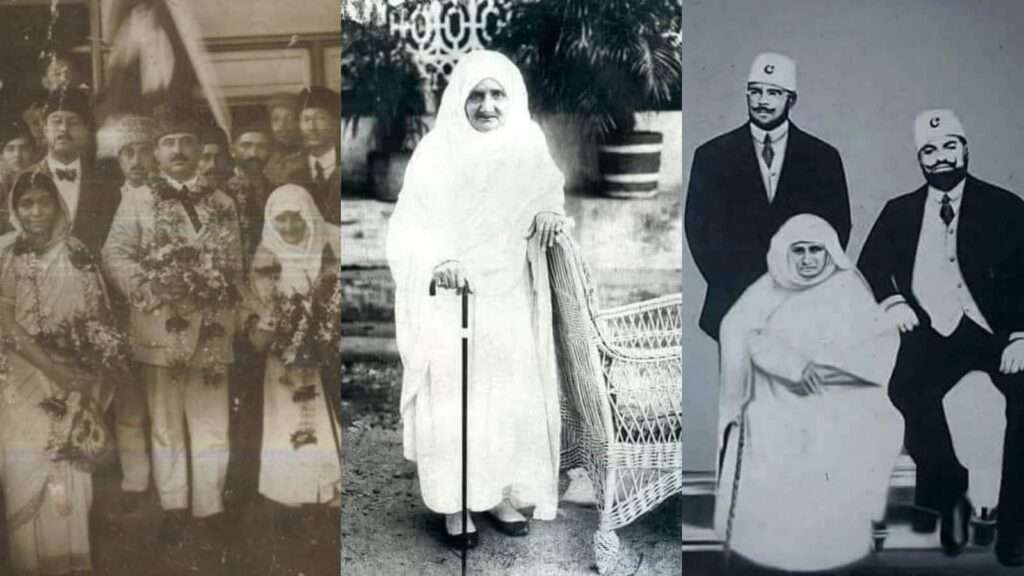
Because eventually, she herself became a political figure.
From a Widow and Mother to a Political Voice
For much of her life, Bi Amma lived within the conventions of her time. She observed purdah and belonged to a conservative social environment. Yet history sometimes creates moments when ordinary people are forced to make extraordinary choices. For Bi Amma, that moment came when the political struggle began entering homes.
The Khilafat Movement and the wider anti-colonial movement were mobilising people across India. Her sons were deeply involved. Mohammad Ali Jauhar became an important political leader, journalist and advocate of resistance to British rule, while Shaukat Ali joined him in the Khilafat and Non-Cooperation movements. And when the British imprisoned nationalist leaders, Bi Amma did not remain at home waiting for her sons to return.
She stepped into the movement herself.
In 1917, she participated in the agitation connected with the release of Annie Besant, whose Home Rule activities had brought her into conflict with the colonial government. Around the same period, Bi Amma began emerging as a public voice capable of mobilising Muslim women. The Government of India’s Amrit Mahotsav archive records that Mahatma Gandhi encouraged her to address political gatherings because of her ability to reach women.
This was revolutionary in its own way. Imagine the scene. A woman who had spent most of her life within the boundaries of purdah now standing before a political gathering, addressing people about freedom. She was not a university-educated politician. She was not a legislator. She did not come from the world of newspapers or political offices.
She was a mother. A widow. A Muslim woman from North India. And she had decided that the freedom of the country was also her responsibility.
The Woman Behind the Fundraising
Freedom movements need more than speeches. They need people. They need organisation. They need money. They need courage. Bi Amma understood this. She travelled extensively to mobilise support for the Khilafat movement and the broader struggle against colonial rule. She spoke at gatherings, encouraged women to participate, promoted khadi and appealed to people to reject foreign goods. She also played an important role in fundraising.
During the Non-Cooperation movement, she travelled through different parts of India. The Government of India’s record notes that during a tour of Bihar in February 1922, she helped collect ₹60,000 for the Khilafat Committee in Darbhanga a substantial sum in that period. Think about what that number means beyond the currency. It represents women opening their boxes.Families giving away savings. Jewellery being removed from cupboards. Ordinary people contributing whatever they could.
And at the centre of this mobilisation was an elderly Muslim woman who had herself once pawned her jewellery to educate her children. There is something deeply poetic about that.
The woman who had sacrificed her jewellery for her children’s education later encouraged other women to sacrifice their possessions for the country’s freedom.
Bi Amma’s political importance was not only in the money she collected. It was also in the women she brought into the movement.
Alongside women such as Sarojini Naidu, Basanti Devi, Sarala Devi Chaudhurani and Begum Hasrat Mohani, she participated in efforts to mobilise women and encourage contributions to the freedom struggle. Women-only gatherings became important spaces where women who were otherwise excluded from formal politics could hear about nationalism, boycott, khadi and swaraj. Her presence carried a message that was difficult to ignore:
If an older woman who had lived much of her life behind the veil could come forward for the country, why couldn’t others? That is perhaps one of the most important parts of Bi Amma’s story. She did not simply ask women to support the freedom struggle.
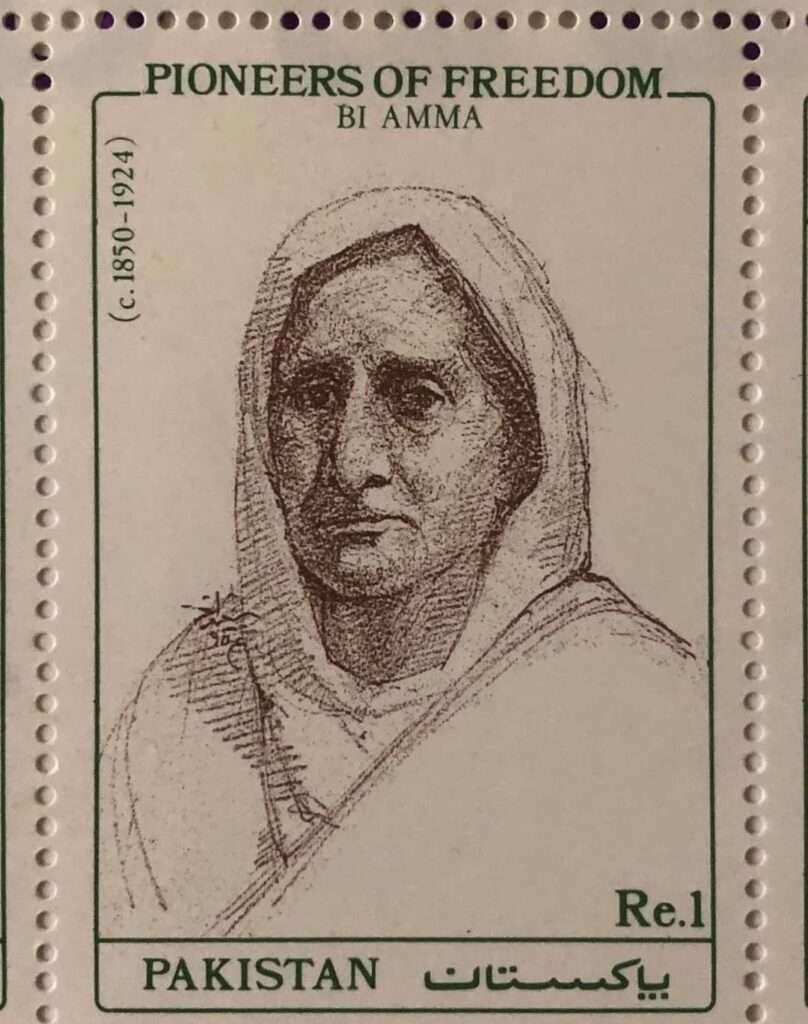
She made their participation visible.
A Mother Who Asked Her Sons Not to Fear Prison
The most moving part of Bi Amma’s story is perhaps her relationship with her sons. When Mohammad Ali and Shaukat Ali became involved in the freedom struggle, imprisonment became part of their lives. For most mothers, the imprisonment of a son would mean fear.For Bi Amma, it became another reason to strengthen the struggle.
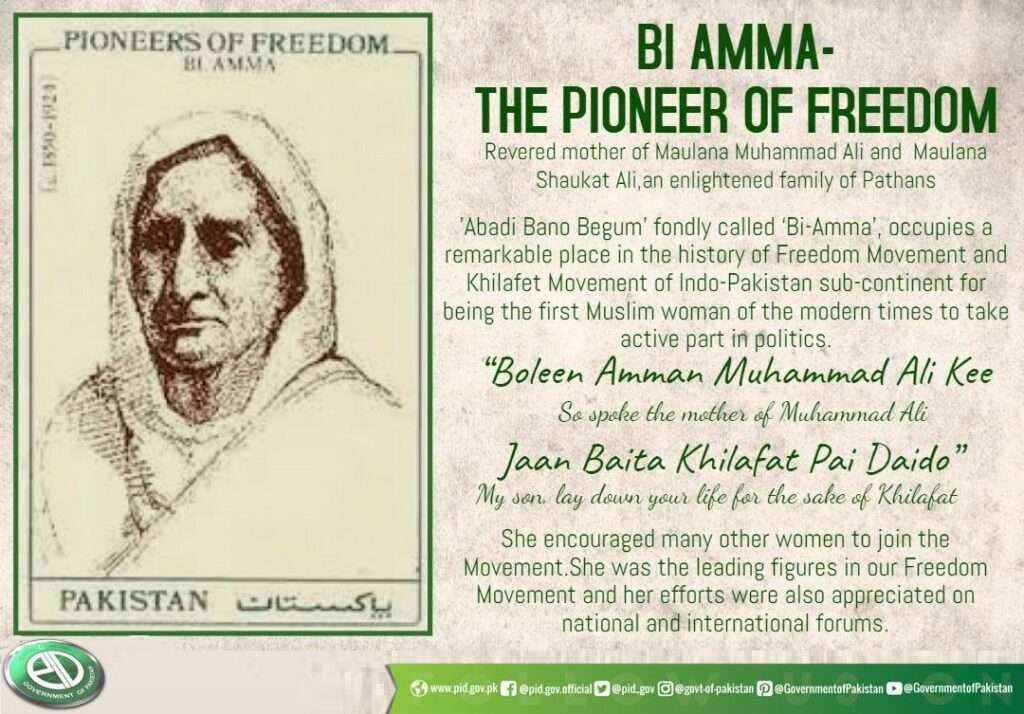
The words attributed to her and later remembered by her son Mohammad Ali Jauhar became part of the political memory surrounding her:
“Bolein Amma Mohammad Ali se,
Jaan beta Khilafat pe de do…”
Her message was essentially that if her sons had to sacrifice themselves for the cause they believed in, they should not turn back.There is something extraordinary about that. A mother who had raised her children through widowhood, poverty and uncertainty was now telling them that the country and the cause were larger than their own safety.
Her son Mohammad Ali Jauhar later remembered his mother with profound admiration. He described her as practically illiterate but wiser than many educated people he had encountered. That observation perhaps tells us more about Bi Amma than any political title could.
She may not have had a formal education, but she possessed political understanding.
“The Two Eyes of India”
Bi Amma’s political message was not limited to the Khilafat cause. She repeatedly advocated Hindu-Muslim unity and communal harmony. She understood something that many political leaders of her time also recognised: colonial rule could be challenged more effectively when Indians saw one another as partners rather than enemies. Her vision of India was not built around one community alone. It was built around unity. She is remembered as describing Hindus and Muslims as “the two eyes of India.” The metaphor is powerful. A person cannot see properly with only one eye. For Bi Amma, India too could not move towards freedom while one community was separated from another.
Why Don’t We Remember Her Enough?
This is perhaps the most uncomfortable question her story raises. Why do we know the names of so many male leaders, while women like Bi Amma remain largely absent from popular memory? Why is she often introduced only as “the mother of the Ali Brothers” when she herself travelled across India, addressed political gatherings, mobilised women, raised funds and participated in the nationalist movement? Even the Government of India’s Amrit Mahotsav initiative categorises her among the country’s unsung heroes.
Jamia Millia Islamia has also preserved her memory through its Bi Amma Girls’ Hostel, named after the freedom fighter. Its institutional records describe her as a courageous nationalist who organised meetings, encouraged women to use khadi, opposed foreign goods and worked for Hindu-Muslim unity. But a name on a hostel is not enough. A mention in an archive is not enough. A woman who helped bring other women into the freedom struggle deserves to be part of the everyday story we tell our children about India’s Independence.
The Freedom Struggle Was Not Only Fought on Battlefields
Bi Amma died on 13 November 1924. She did not live to see India become independent in 1947. She never saw the Union Jack come down from the Red Fort. She never heard the announcement of India’s independence. But perhaps that is exactly why her story matters. Freedom struggles are rarely completed by the people who begin them. Some people plant the seed. Some water it. Some protect it through the hardest years.And others eventually see it become a tree.
Bi Amma was one of those who planted the seed. Her story also forces us to rethink what participation in the freedom movement actually meant. It was not always a man standing at a political podium. Sometimes it was a widow pawning her jewellery so her children could study. Sometimes it was a mother encouraging her sons not to surrender. Sometimes it was an elderly woman travelling from city to city, asking women to contribute their jewellery and money. Sometimes it was a woman stepping beyond the boundaries society had drawn around her. And sometimes, it was simply the courage to say:
“This country is mine too. Its freedom is my responsibility too.” That is why Bi Amma deserves to be remembered—not merely as the mother of Mohammad Ali Jauhar and Shaukat Ali, but as Abadi Bano Begum, a political voice in her own right. As we celebrate Independence Day, her story reminds us that India’s freedom was not built by a handful of famous names. It was built by thousands whose names disappeared from public memory. Among them was a woman in a burqa who stepped into India’s freedom struggle and made her voice heard.
Her name was Bi Amma. And perhaps the most fitting way to remember her is not to ask why she stepped out of purdah.It is to ask:
What made her believe that freedom was worth stepping out for?
That question brings Bi Amma’s story back to life. And perhaps, after more than a century, it is time we listened to her again.