Story by Tooba Khatoon | Updated by Yusra Siddiqui | New Delhi
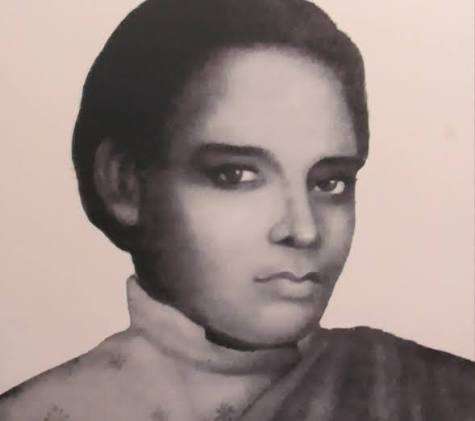
When we remember Maulana Hasrat Mohani, we usually remember the poet, the freedom fighter, the uncompromising nationalist, and the man associated with the famous slogan “Inquilab Zindabad.” But behind much of his political life stood another determined figure his wife, Begum Nishatunnisa Mohani.
It is easy to introduce her simply as Hasrat Mohani’s wife. That, however, tells only a small part of her story. Nishatunnisa was herself politically aware, outspoken and involved in the freedom movement. When her husband was imprisoned, she did not retreat into the private sphere. In several instances, she stepped forward to manage the work he had left behind, dealt with British authorities and continued the publication of his newspaper, Urdu-e-Mualla.
Born in 1884, Nishatunnisa grew up in a period when the education of girls was still largely restricted to the home. Sources record that she was educated privately and developed proficiency in Urdu, Arabic, Persian and English. She later became involved in teaching girls in her community. These details are important because they show that her public life did not begin with her husband’s imprisonment. Education and social engagement were already part of her world.
Her marriage to Hasrat Mohani brought her into the heart of a politically turbulent household. Hasrat was not the kind of political figure who easily compromised with the colonial government. His newspaper, Urdu-e-Mualla, frequently criticised British rule, and his political activities repeatedly brought him into conflict with the authorities. Nishatunnisa understood the risks of the life they had chosen.
One of the most revealing moments comes from a letter she wrote to her husband after his imprisonment. Instead of asking him to compromise or worrying about what his political activities might mean for the family, she encouraged him to remain firm:
“Whatever trouble has befallen you, bear it like a man. Do not worry about me or the house at all. Be careful that you do not feel any kind of weakness.”
The significance of these words lies not simply in their patriotism. There is something deeply personal about the letter. Her husband was in prison, the family was facing uncertainty, and yet her concern was that he should not lose courage. She was not standing outside the struggle and cheering from a distance. She was living with its consequences herself.
And when the consequences arrived, she dealt with them.
During Hasrat Mohani’s imprisonment, Nishatunnisa took responsibility for continuing the publication of Urdu-e-Mualla. She also faced legal disputes with the colonial government connected to the newspaper and her husband’s political activities. In other words, the press became one of the places where she herself confronted British authority.
This part of her life deserves particular attention. Newspapers were an important weapon of the nationalist movement. They carried political arguments into homes, towns and public spaces, but publishing anti-colonial material could also invite censorship, prosecution and imprisonment. By helping keep Urdu-e-Mualla alive, Nishatunnisa was not merely protecting her husband’s work. She was participating in the political struggle through the written word.
Her politics were also not confined to the Congress mainstream. When the Congress split between moderates and more assertive nationalists in the early twentieth century, Nishatunnisa supported Bal Gangadhar Tilak, aligning herself with the more radical political current alongside her husband. Later, she participated in the Khilafat and Non-Cooperation movements. She also became associated with the Swadeshi campaign and is credited in several accounts with establishing the Aligarh Khilafat Store, a khadi shop whose proceeds supported nationalist work, including Mahatma Gandhi’s Young India.
Her relationship with Gandhi was not one of unquestioning agreement either. This is one of the more interesting aspects of her political life. Nishatunnisa strongly advocated the idea of complete independence, and accounts describe her as having criticised Gandhi when she felt the Congress was not sufficiently committed to that position. One historical account even notes that Gandhi admired the sharpness of her criticism.
That detail changes the way we look at her. She was not simply following whichever political leader happened to be around her. She had political opinions of her own and was prepared to express them even to leaders as influential as Gandhi.
Her public life also extended beyond the immediate struggle against British rule. She was involved in questions concerning women and social reform, and accounts place her among Muslim women who participated in political meetings and delegations during the period. Her life therefore sits at the intersection of several movements of the time: nationalism, Khilafat, Swadeshi, women’s participation and the demand for greater political freedom.
There is another side of Nishatunnisa that makes her story particularly human. Historical records and recently published scholarship have brought attention to her personal letters, including correspondence written to family members during a pilgrimage to Iraq shortly before her death. These letters reveal a woman interested not only in politics and public affairs but also in the ordinary details of travel, technology, religion and family life. A recent scholarly volume from Boston University Press describes these letters as among the first English translations of her correspondence and presents them as an important window into her personality beyond her political identity.
This is perhaps what makes Nishatunnisa Mohani worth remembering today. She was not a figure who existed only in the shadow of a famous husband. At home, she was a wife and mother; in public life, she became a political worker, organiser and participant in the freedom movement; when circumstances demanded it, she became the person who kept a newspaper running and faced the colonial administration.
She died on 18 April 1937, decades before India became a republic.
Her story also reminds us of something that is often missing from accounts of the freedom struggle. Political history is usually written around speeches, arrests, resolutions and famous leaders. But movements survive because someone keeps the newspaper running when its editor is in jail. Someone answers the legal notices. Someone manages the household when an income disappears. Someone writes a letter telling a prisoner not to lose courage.
For Nishatunnisa Mohani, freedom was not an abstract idea. It entered her home, her marriage, her finances, her writing and her everyday life.
That is why remembering her only as “the wife of Hasrat Mohani” does her a disservice. She was his companion in a difficult political life, but she was also a participant in the struggle in her own right. And perhaps the most fitting way to remember her is through the courage contained in her own letter: when the man she loved was behind bars, she did not ask him to be afraid.
She asked him to remain strong.