A hundred years ago, when cinema itself was still young in India, a Muslim woman was not waiting for someone to give her an opportunity. She created one
Mohsin Mushtaq
New Delhi: When Payal Kapadia’s All We Imagine as Light won the Grand Prix at Cannes in 2024, India celebrated a moment that felt historic.
A woman from India had taken her film to one of the world’s most important film festivals and returned with one of its biggest honours. The win also brought India back into the Cannes Competition after a 30-year absence.
There were celebrations, headlines and conversations about Indian cinema finding a larger place on the world stage. But there was a story from exactly a century ago that deserved to be remembered alongside it.
Because long before Indian women were walking the red carpet at Cannes, one Indian Muslim woman had already walked into a film studio, looked beyond the actors and decided she wanted to direct.
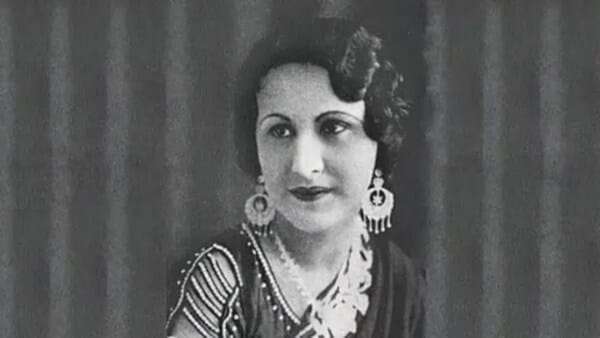
Her name was Fatma Begum.
In 1926, she did something that no Indian woman had done before. She directed a film. Not just any film, but a fantasy called Bulbul-e-Paristan.
The film is now lost, but its place in Indian cinema remains. Fatma Begum is recognised as the first woman director in Indian cinema, and she was not simply its director. She wrote, produced and acted in her own films.
A hundred years ago, when cinema itself was still young in India, a Muslim woman was not waiting for someone to give her an opportunity. She created one.
Who was Fatma Begum?
Born in 1892, Fatma Begum came from an Urdu-speaking Muslim background and was associated with the cultural world of Sachin in Gujarat. Before entering films, she had a career on the Urdu stage, where she developed the performance and storytelling skills that would later shape her work in cinema.
She was also a mother to three daughters, Sultana, Zubeida and Shehzadi, who would all enter the silent-film era as actresses.
Fatma entered cinema at a time when the industry was still taking shape. Women had limited space on screen, and in the early years of Indian cinema, female roles were sometimes performed by men. Coming from theatre, Fatma made her film debut in 1922 with Veer Abhimanyu, associated with filmmaker Ardeshir Irani.
But acting was only the beginning. Within a few years, Fatma would move beyond the screen and begin creating films of her own. She was not content with simply being part of the new industry; she wanted a hand in shaping it. And that is where her story becomes extraordinary.
From actress to filmmaker
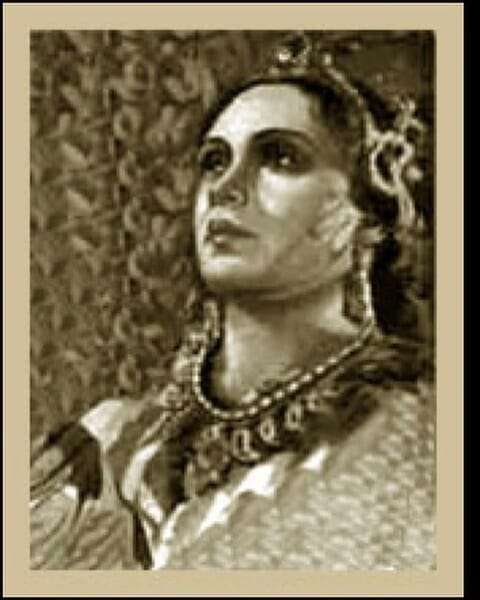
In 1926, Fatma founded her own production company, Fatma Films. That same year, she directed Bulbul-e-Paristan, a film whose title itself points towards the world she wanted to create, as Paristan means fairyland.
Fatma had chosen fantasy at a time when Indian cinema was still discovering what the camera could do. The film was an ambitious production, known for its elaborate costumes and early special effects, with her daughters Zubeida and Shehzadi also appearing in it.
There were no computer-generated worlds, green screens or digital effects. There was a camera, there was film, and there was imagination. Fatma had all three.
The film itself has not survived. Like many films of India’s silent era, Bulbul-e-Paristan has been lost, leaving behind historical records and the name of the woman who made it.
Perhaps that is one of the strangest things about Fatma Begum’s story. The woman who made history has survived in our memory, while the film through which she made that history has not.
She did not just direct. She built it.
Calling Fatma India’s first woman director is important, but it does not tell the whole story.
She was a writer, producer, director and actress, working across different parts of an industry that was still finding its feet. Alongside her own productions, she also worked as an actress with studios including Kohinoor and Imperial.
In 1928, her production company became Victoria-Fatma Films, through which she continued making films. She directed Heer Ranjha that year, with her daughter Zubeida playing Heer, and went on to make films including Chandravali, Kanak Tara, Milan Dinar, Naseeb Ni Devi and Shakuntala.
Her daughters were not simply watching their mother work. They were becoming part of the industry themselves.
Sultana became a prominent actress of the silent era, while Zubeida would go on to make history of her own. In 1931, she starred in Alam Ara, India’s first talkie.
So Fatma’s story did not end with her taking the director’s chair. It continued through the women she brought with her.
A mother who opened more than one door
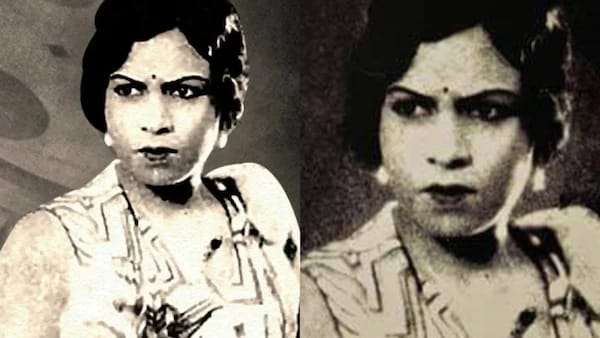
Fatma did not enter the cinema alone. She brought her daughters into it, managed their careers and cast them in her films, and they went on to build careers of their own.
This makes her story larger than the familiar distinction of being India’s first female director. She was creating a space where women could work, and she was doing it within her own family.
At a time when women entering public performance could still face social restrictions, Fatma and her daughters became visible figures in one of India’s newest industries. They were not merely appearing in films; they were becoming part of the history of Indian cinema.
And then, almost quietly, she disappeared from the story. Victoria-Fatma Films closed its doors in 1929. Fatma continued acting and remained connected to the careers of her daughters. She returned to films in the talkie era and appeared in productions including, Seva Sadan, Neki Ka Taj and Duniya Kya Hai. Her final screen appearance is generally recorded as Duniya Kya Hai in 1938.
She died in 1983 at the age of 91. And somewhere along the way, the woman who had once made history became a largely forgotten name.
That may be the most striking part of her story. India’s first woman film director, a writer, producer, actress and filmmaker, and the mother of three actresses, had gradually slipped outside the popular memory of the cinema she helped build.
A century later
That is why Fatma Begum deserves to be remembered today. Not as a footnote before the “real” history of Indian cinema began, but as someone who was part of that history from its early years.
When we talk about Indian cinema reaching Cannes, about women behind the camera and about the changing place of women in filmmaking, we are talking about a journey that began much earlier.
Fatma Begum was one of the women who started walking that road when it barely existed. Payal Kapadia’s Cannes moment belongs to 2024. Fatma Begum belongs to 1926.
Between those two moments lies a century of Indian cinema, a century of changing technology, changing audiences and generations of women who have written, acted, produced and directed their way into an industry that once offered them little space.
Fatma’s film may be lost. Her story should not be. Because perhaps the most important thing she left behind was not Bulbul-e-Paristan. It was the idea that a woman could walk into a young industry, refuse to remain on the margins and say, I can make the film too.
A century later, that sentence still carries weight.