Dr. Shamim Ajaz
“Education can open doors, challenge limitations, and help turn curiosity into meaningful contributions to society.” – Professor Bushra Ateeq
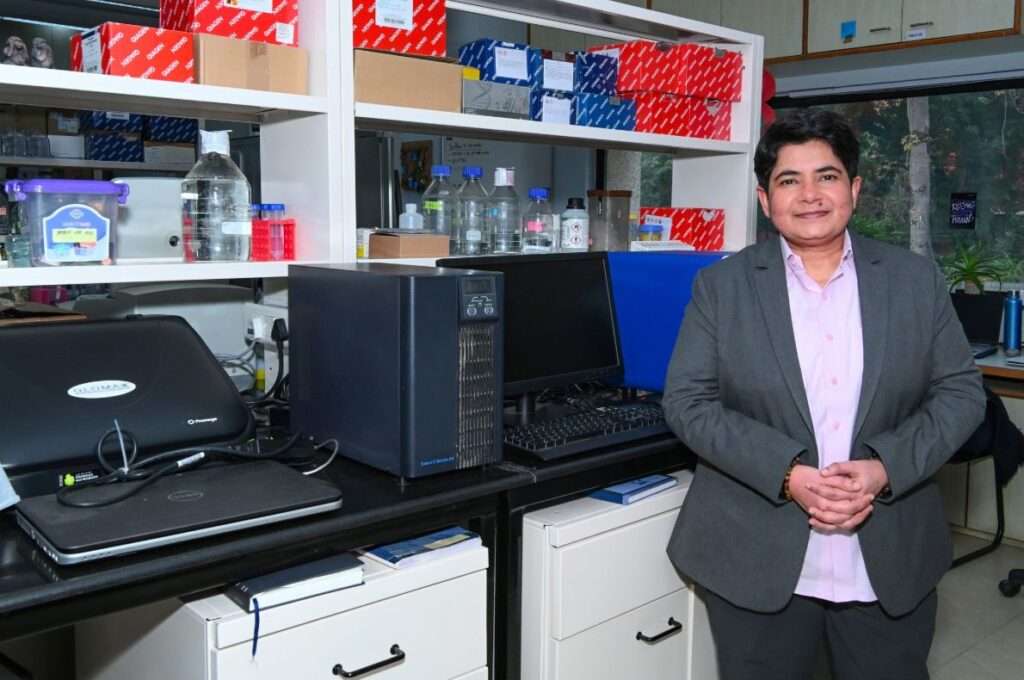
Cancer research is, at its core, a search for answers. Why do some tumours grow more aggressively than others? Why do certain treatments work for one patient but fail for another? And how can scientists uncover the biological mechanisms that might lead to earlier detection and more effective therapies? For Professor Bushra Ateeq, a cancer biologist at the Indian Institute of Technology (IIT) Kanpur, these questions have shaped a career dedicated to understanding the disease at its molecular level.
Bushra’s work examines the genetic and molecular changes that influence cancer development, progression and resistance to treatment. It is a painstaking research, often involving years of investigation before a discovery can translate into a potential medical application.
But beyond the laboratory, her journey carries another significance: that of a woman who has built a career in a demanding scientific field and whose work offers a compelling example for young women aspiring to enter research, medicine and academic leadership.
Born and raised in Bareilly, Uttar Pradesh, Ateeq’s journey from the classrooms of Aligarh Muslim University (AMU) to the laboratories of IIT Kanpur has been shaped by education, specialised training and a sustained curiosity about human health. Her story is not simply about reaching the top of a profession. It is also about the possibilities that emerge when women are able to pursue knowledge, develop expertise and contribute to fields that influence the future of society.
An education that opened new possibilities
Ateeq began her academic journey at AMU, where she completed her undergraduate and postgraduate studies before earning a PhD in Genetics in 2003. Her academic interests led her towards the molecular mechanisms that govern biological processes, laying the foundation for her later work in cancer biology.
For a researcher seeking to understand a disease as complex as cancer, education is only the beginning. The questions are constantly evolving, and answering them requires a combination of technical expertise, rigorous experimentation and the ability to work across disciplines.
Ateeq continued to build her research experience at some of India’s leading scientific institutions, including the All India Institute of Medical Sciences (AIIMS), New Delhi, and the National Institute of Immunology. Her training in cell biology and molecular techniques strengthened her understanding of the processes through which cells function, change and sometimes become diseased.
She subsequently travelled abroad for postdoctoral research fellowships at McGill University in Canada and the University of Michigan Medical School in the United States. These experiences exposed her to advanced cancer research, genomics and collaborative approaches to scientific investigation.
The international research environment offered opportunities to explore new methods and engage with questions that continue to challenge scientists around the world. It also brought into focus the need to understand cancer in different populations and healthcare settings.
Cancer may be a global health challenge, but its biological complexity demands attention to the characteristics of individual tumours and patients. Ateeq’s subsequent work in India would examine these differences, contributing to research into the molecular mechanisms that could help explain why particular cancers behave differently and respond differently to treatment.
Choosing to build a research career in India
In 2013, Ateeq returned to India to join the faculty at IIT Kanpur, where she established her research laboratory.
The decision marked a defining stage in her career. Equipped with international research experience, she began investigating questions with potential implications for understanding cancer in greater molecular detail. Her work has focused on the genetic and epigenetic changes that influence how tumours develop, progress and respond to therapy.
Cancer is not one uniform disease. Tumours arising in the same organ can possess different molecular characteristics, and these differences may influence their aggressiveness and response to treatment. Understanding them is essential to the development of personalised medicine, which seeks to move beyond standardised treatment approaches by considering the characteristics of an individual patient’s disease.
Ateeq’s research explores this complexity, particularly through investigations into aggressive cancer subtypes and the molecular pathways that drive their behaviour. One important area of her work is SPINK1-positive prostate cancer, a subtype associated with distinct biological characteristics and challenges in treatment.
By studying the molecular mechanisms involved in these tumours, her laboratory seeks to identify potential biomarkers and therapeutic targets. Such research could eventually contribute to better ways of classifying cancers and identifying treatment approaches suited to their underlying biology. The findings, however, must undergo rigorous testing and validation before their clinical usefulness can be established.
The significance of this work lies in the questions it seeks to answer. If scientists can better understand what makes a tumour aggressive, they may be able to identify patients who need closer monitoring or investigate therapies designed to target the mechanisms driving the disease.
For Ateeq and her team, decoding cancer means looking beyond its visible symptoms to investigate the biological processes that sustain it.
Looking for the signals that cancer leaves behind
One of the central challenges in cancer care is detecting disease early and determining how it might progress. This is where biomarkers have become an important area of scientific investigation.
Biomarkers are measurable biological indicators that can provide information about a disease. In cancer research, certain molecules may help researchers distinguish tumour subtypes, investigate the likelihood of aggressive progression or understand how a cancer responds to treatment.
Ateeq’s laboratory has investigated potential biomarkers, including specific non-coding RNAs and proteins, that may help distinguish aggressive tumours. Non-coding RNAs are molecules that do not produce proteins but can influence how genes function and regulate cellular processes. Studying them can offer insights into the mechanisms that contribute to cancer development.
Her work also examines how genetic alterations influence tumour behaviour and contribute to drug resistance. In some cases, cancer treatments that initially prove effective may lose their impact as tumour cells develop mechanisms that allow them to survive. Understanding these changes is critical to identifying possible ways of overcoming resistance.
Ateeq’s research into prostate cancer has explored how prolonged treatment can be associated with resistance and how targeted combination therapies might offer avenues for further investigation.
Her laboratory has also examined SPINK1-related molecular mechanisms in prostate, colorectal and breast cancers, seeking to understand the distinct processes involved and identify potential opportunities for targeted treatment.
Another strand of her work involves drug repurposing, including investigating established compounds such as certain antimalarial drugs for possible anticancer applications. Although this approach can open new directions for research, laboratory findings alone cannot establish whether a compound is safe or effective as a cancer treatment in patients.
The distinction matters. Scientific discovery is rarely a straight path from the laboratory to the hospital. Potential biomarkers and therapies must be tested, validated and evaluated through further research before they can become part of routine clinical practice.
Yet these investigations are important because they expand the questions researchers can ask and the possibilities they can explore. Each molecular clue can help build a more detailed understanding of a disease that continues to challenge medicine.
Recognition earned through scientific inquiry
Ateeq’s contributions to biomedical research have brought her national and international recognition. Among her honours are the Wellcome Trust/DBT India Alliance Fellowship and the National Bioscience Award for Career Development, reflecting recognition of her work and potential in biomedical science.
She received the Shanti Swarup Bhatnagar Prize in Medical Sciences in 2020, one of India’s prominent scientific honours, awarded by the Council of Scientific and Industrial Research. In 2021, she received the Sun Pharma Research Award in the Medical Sciences category and was included in the Asian Scientist 100, which recognises researchers contributing to scientific advancement across Asia.
Her other distinctions include the ICMR Basanti Devi Amir Chand Award and the TWAS Award in 2024. In 2025, she received the G. D. Birla Award for Scientific Research in recognition of her contributions to biological sciences and cancer research.
She has also been elected a fellow of several Indian scientific academies, including the Indian National Science Academy (INSA), the Indian Academy of Sciences (IASc), the National Academy of Sciences, India (NASI), and the National Academy of Medical Sciences (NAMS).
These honours mark significant milestones in a research career, but their wider meaning extends beyond individual accomplishment. They demonstrate the contribution that sustained scientific inquiry can make to the advancement of knowledge and the importance of supporting researchers whose work addresses complex medical questions.
For women aspiring to careers in science, such recognition also challenges the assumption that scientific authority and leadership belong predominantly to men. Seeing women receive major research honours, lead laboratories and shape academic inquiry can help broaden the possibilities younger generations imagine for themselves.
Representation, however, is only one part of the equation. Women also need access to quality education, research facilities, mentorship and institutions that enable them to develop their abilities and pursue leadership without gender becoming a barrier.
Making space for the next generation of women scientists
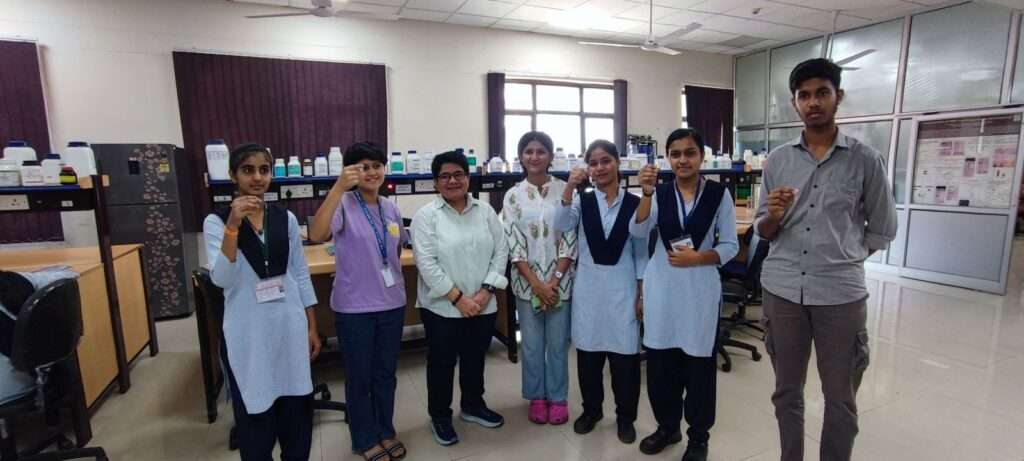
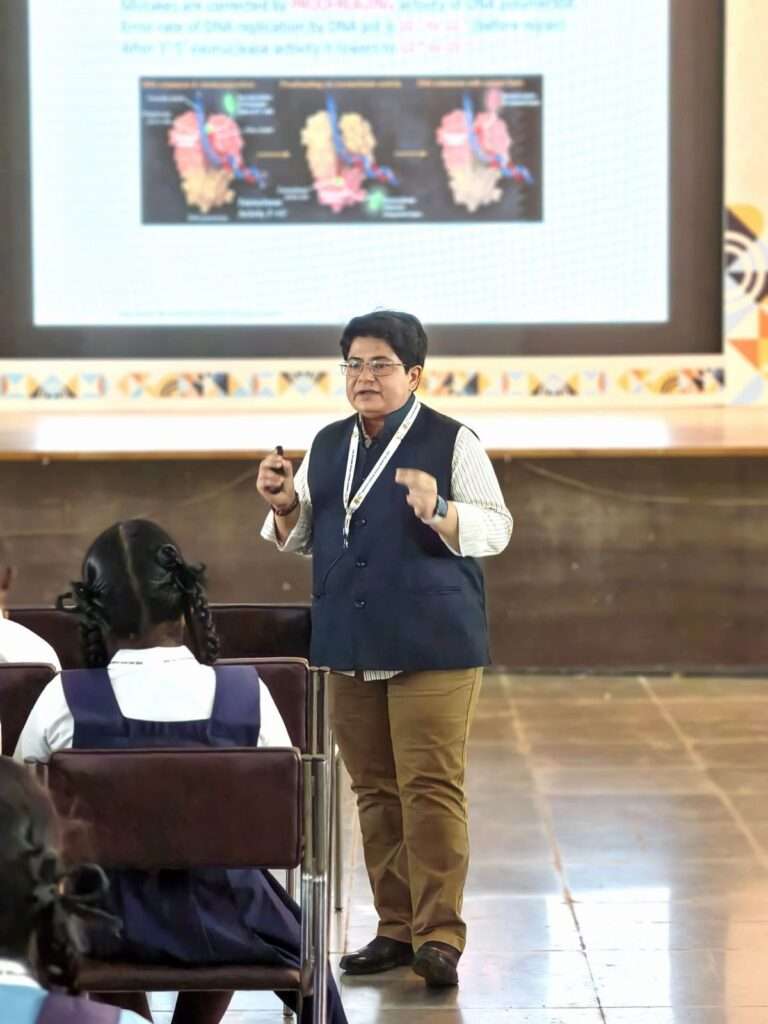
Ateeq’s professional contribution extends beyond her research into the role of mentorship and academic leadership. At IIT Kanpur, she works in an environment where scientific rigour, collaboration and the development of young researchers are integral to academic life. Her encouragement of young women to consider careers in science, technology, engineering and mathematics speaks to a wider need to make scientific education and research more accessible.
For many girls, the decision to pursue science is shaped long before they enter a university laboratory. Social expectations, unequal access to educational opportunities and limited exposure to women in scientific leadership can influence how far they believe they can go.
Even after entering the profession, women may encounter questions about their suitability for leadership or face pressure to reconcile demanding careers with expectations outside work. These challenges are not evidence of any lack of ability. They underline the importance of supportive institutions, fair opportunities and professional environments in which women can develop their expertise without being constrained by gendered assumptions.
The presence of women in scientific leadership can help challenge these expectations. Their work makes visible what is possible, while their participation strengthens the diversity of perspectives and experiences within research communities.
Ateeq’s journey offers a reminder that scientific careers are built through years of learning, experimentation, setbacks and persistence. It also highlights the importance of ensuring that the next generation of women researchers has access to the training and support needed to undertake that journey.
Mentorship is particularly important in this process. When experienced researchers encourage young women to ask difficult questions, pursue advanced study and take on positions of responsibility, they help create a culture in which ambition is supported rather than discouraged.
For institutions seeking to improve women’s representation in STEM, the task must go beyond celebrating individual achievers. It requires sustained investment in education, inclusive research environments, professional opportunities and pathways to leadership.
The future belongs to those given the opportunity to shape it
Professor Bushra Ateeq’s journey brings together two important ideas: the power of scientific inquiry and the importance of enabling women to participate fully in the work that shapes society.
Her research seeks to deepen our understanding of cancer, from the molecular changes that influence tumour progression to the biomarkers and therapeutic targets that may inform future approaches to diagnosis and treatment. Such work demands patience, precision and a willingness to pursue questions whose answers may take years to emerge.
Her career also offers a wider lesson about education and opportunity. From her academic beginnings at AMU to her international research training and subsequent work at IIT Kanpur, her path demonstrates how sustained learning can create opportunities to contribute to fields of global importance.
For a young girl considering science, the significance of such a journey lies not in the expectation that she must become an award-winning researcher, but in the knowledge that her curiosity deserves to be taken seriously. She should be able to study, question, experiment and pursue a profession because of her interests and abilities, not be discouraged by assumptions about what women can or should do.
This is particularly important for girls from marginalised and underserved communities, for whom access to higher education, mentorship and professional networks may remain limited. Encouraging their participation in science is not simply about individual advancement. It is about ensuring that talent is not lost because opportunity was never made available.
A society that invests in girls’ education creates the conditions for more women to become researchers, doctors, educators, innovators and leaders. It also strengthens the institutions and communities that benefit from their contributions.
Ateeq’s story reminds us that the progress of science depends on asking questions that do not yet have easy answers. The progress of society, meanwhile, depends on ensuring that every girl has the freedom and opportunity to ask those questions, pursue the answers and shape the future.
The next generation of women scientists should not have to see a career in research as an exception to the expectations placed upon them. They should be able to see it as one of the many futures open to them.
That possibility begins with education, grows through opportunity and becomes meaningful when women’s knowledge, ideas and leadership are recognised as an essential part of scientific and social progress.
(Dr. Shamim Ajaz is an academic administrator, educator and researcher with over 25 years of experience in education and scientific research. She holds a PhD in Botany from Aligarh Muslim University and has published research in national and international journals. Her work spans academic leadership, plant sciences and environmental research.)