Written by- Yusra Siddiqui, Research scholar, JMI
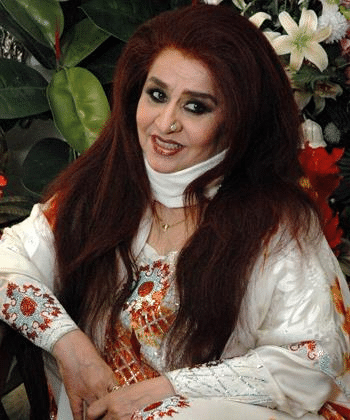
What does it take for a Muslim woman to enter a male dominated industry, challenges conventional wisdom, and then build a business that becomes famous around the world? It takes more than an idea. It takes clear vision when others see impossibility, when the negativity appears and then determination turns into opportunities. For Shahnaz Hussain, one of India’s best known Muslim woman entrepreneur, that vision lay in an unexpected place that is the ancient Indian system of Ayurveda. when the beauty industry was increasingly associated with cosmetics and chemical based formulation, Shahnaz Husain built her business around herbal beauty, drawing on India’s traditional knowledge of plants and natural ingredients which began as an entrepreneurial vision developed into an international brand, establishing her as a pioneering figure in the natural beauty care industry. Her story is not only about business success, it is about a Muslim woman challenging expectation, building an identity on her on terms, and describing that innovation can emerge from traditional tradition. For a woman especially Muslim woman to achieve such recognition carries ultra significance in a world where women from minority communities can find themselves navigating both gender stereotypes and social prejudice. Yet, Shahnaz Husain’s journey also remind us the history of Hazrat Khadijah who lead trade and created the place in business and leadership.
How she rewrote the beauty Rulebook- The Herbal Revolutionary
Shahnaz Husain’s journey began in the beauty industry, where she saw an opportunity to apply the principles of Ayurveda to modern beauty care. After training in modern therapy, she developed a conviction that herbal ingredients and traditional Indian knowledge could offer an alternative approach to beauty treatments. Rather than simply follow established industry conventions and rules she set out to create a different business identity around this idea. She started making products by hand at home. As demand grew, the business converted into
manufacturing salons, treatment, training, and retail. This achievement and progression from a personal vision to an organized enterprise demonstrate the importance of recognizing a market opportunity and developing into a sustainable business. But obviously this is not easy for woman especially a minority woman who break the glass ceiling, the barriers that prevent woman from advancing into leadership positions despite their abilities qualifications and achievement. For Muslim women entrepreneur the challenge may begin long before they reach a boardroom, these challenges can be compounded by assumptions about religious identity,cultural expectations, and what women from their communities are supposedly capable of achieving and this all things makes the visibility of entrepreneurs such as Shahnaz Husain particularly important. Her path demonstrates that a woman can build a business even in a competitive industry and recognition for her work and develop different identity that reaches beyond national boundaries. Her achievements challenge the idea that Muslim women must
remain on the margin of economic life but the truth is also that glass ceiling is not simply about proving that one woman can succeed. It is about changing the expectations that determine who gets an opportunity in the first place. Muslim women achievement should not be treated as an exception that confirms how unusual female leadership is. It should help establish the understanding that mostly women belong in Business Innovation, management, and decision making as naturally as men do. Her journey also illustrate the importance of intellectual independence. She built a business around a vision of herbal beauty care rather than depend entirely on the conventions of the industry. In doing so she showed how an entrepreneur can turn an idea into a distinct commercial identity.
Her Journey of Breaking Glass Ceiling and Empowering Muslim Women to lead
Her life is about more than an herbal beauty products, international recognitions and awards. It is about the transformation of a vision into an enterprise and the ability of Muslim woman to establish herself in a competitive industry. And when aligned with the example of Hazrat Khadijah it becomes a part of much larger narratives that is Muslim women have contributed to economic and social life across generations and their ambitions and dedications cannot be reduced to stereotypes imposed upon them.
The glass ceiling will not disappear through inspirational stories alone. It requires fair access to resources change in attitudes and a willingness to recognize Muslim women’s contributions without prejudice but stories also matter because they challenge the limits people place on each other. They remind young women that leadership is not reserved for a particular gender or a particular community and that a woman’s background does not have to determine the scale of her ambitions. And that is what breaking the glass ceiling truly means, not simply reaching at a level where Muslim women were once excluded but making sure that the door remains open
for those who follow it.