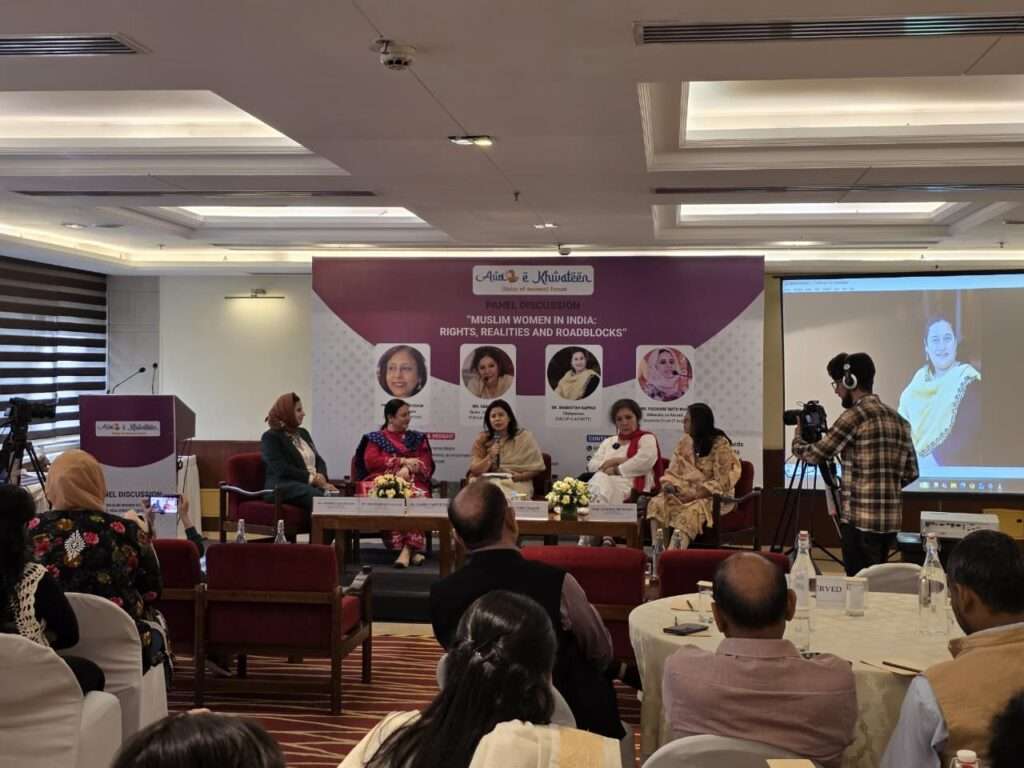
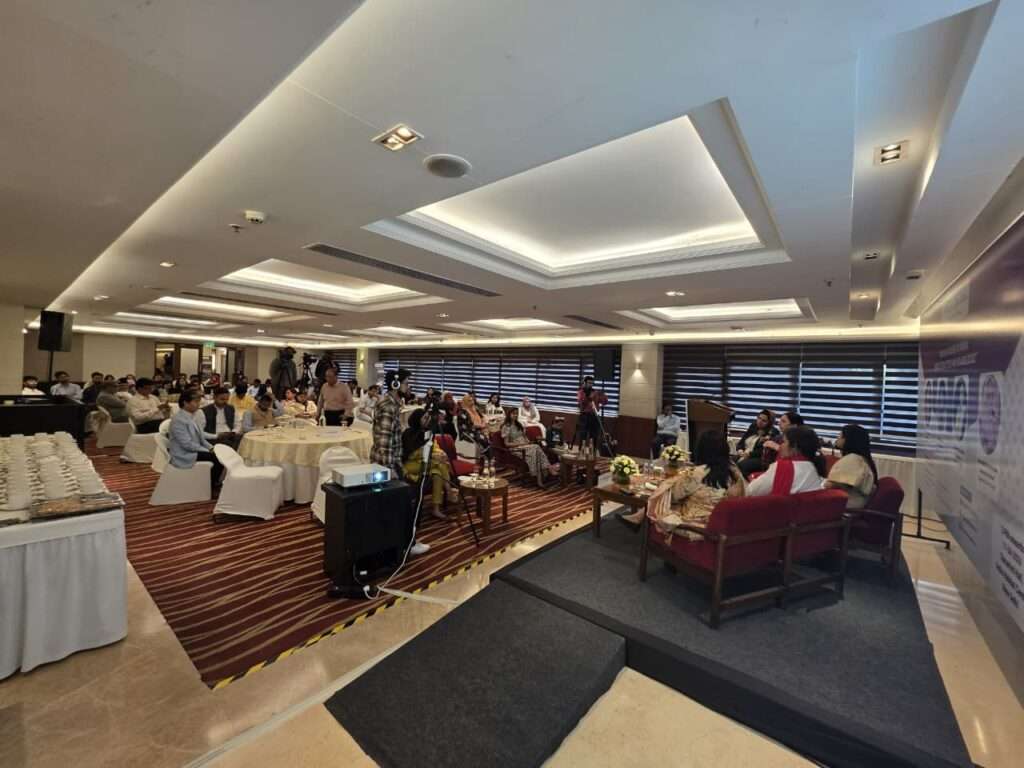
On 11th April 2026, Awaz-e-Khwateen successfully organised a panel discussion and felicitation ceremony at the Indian Habitat Centre, New Delhi, bringing together distinguished voices from media, academia, law, and social sectors.
“Muslim Women in India: Rights, Realities and Roadblocks”
The panel discussion brought together distinguished experts to critically examine the status, challenges, and lived realities of Muslim women in India, focusing on legal, social, educational, and economic dimensions. The discourse moved beyond narrow religious interpretations to address the structural and systemic factors influencing empowerment.
The session featured eminent panelists including Ms Saba Naqvi, Mrs Sabiha Hussain, Ms Shabishta Ghaffar, and Mrs Firdouse Qutb Wani, who brought diverse perspectives from media, academia, law, and social development.
Key Themes and Insights
1. Constitutional Guarantees vs. Ground Realities
While the Indian Constitution ensures equality, dignity, and fundamental rights for all citizens, including Muslim women, a significant gap persists between these rights and actual lived experiences. The panel emphasised that the barriers are largely socio-economic and structural, rather than rooted in religion itself.
2. Intersectionality and Policy Perspective
Panellists highlighted the importance of adopting an intersectional approach, where Muslim women are not viewed solely through a religious lens but also through gender, class, and citizenship frameworks. Effective policy discourse must focus on access to opportunities, resources, and equity-driven empowerment.
3. Media Representation vs. Reality
The discussion pointed out a sharp contrast in narratives:
- Western portrayals often depict Muslim women as oppressed and voiceless
- Other narratives tend to over-romanticise their condition
The panel advocated for a more nuanced and balanced understanding, focusing on rights, resources, realities, and roadblocks.
4. Socio-Economic Challenges
Muslim women face multi-layered challenges, including poverty, lack of access to healthcare, education, and basic infrastructure. These systemic issues significantly limit mobility, participation, and opportunities for advancement.
5. Education and Accessibility
Although education is a constitutional right, dropout rates among Muslim girls remain high due to financial constraints, early marriage, and lack of institutional support. The panel stressed that the issue is one of equity rather than mere equality, requiring targeted interventions.
6. Legal Awareness and Access to Justice
Despite the presence of robust legal frameworks and rights under both constitutional and personal laws, many women are unable to access justice due to:
- Lack of awareness
- Social stigma
- Fear of societal repercussions
The need for legal literacy and accessible support systems was strongly emphasised.
7. Stereotyping and Identity Challenges
Muslim women often face stereotyping and discrimination both within and outside their communities. Issues surrounding identity, including attire such as the hijab, reflect deeper tensions around choice, autonomy, and societal expectations.
8. Personal Narratives and Support Systems
Panellists shared personal journeys that highlighted the role of family support, mentorship, and institutional backing in overcoming barriers. These stories underscored the importance of enabling environments for women’s growth.
9. Religion and Misinterpretation
The discussion clarified that Islam, in its essence, grants significant rights to women. However, many challenges arise due to misinterpretations, lack of awareness, and socio-political influences, rather than religious doctrine itself.
Policy and Structural Recommendations
- Strengthening the implementation of existing policies at the grassroots level
- Enhancing support for minority educational institutions
- Promoting public-private partnerships for infrastructure and opportunity creation
- Encouraging community-based engagement, respecting cultural diversity
- Shifting focus from equality to equity-driven empowerment models
Conclusion
The panel discussion underscored the need for a holistic, inclusive, and action-oriented approach to addressing the challenges faced by Muslim women in India. It called for collective responsibility from policymakers, civil society, and communities, along with greater awareness and dialogue to ensure meaningful empowerment.
The session concluded with a broader appeal for societal support, especially from men, to foster an environment where women can exercise their rights with dignity and confidence.