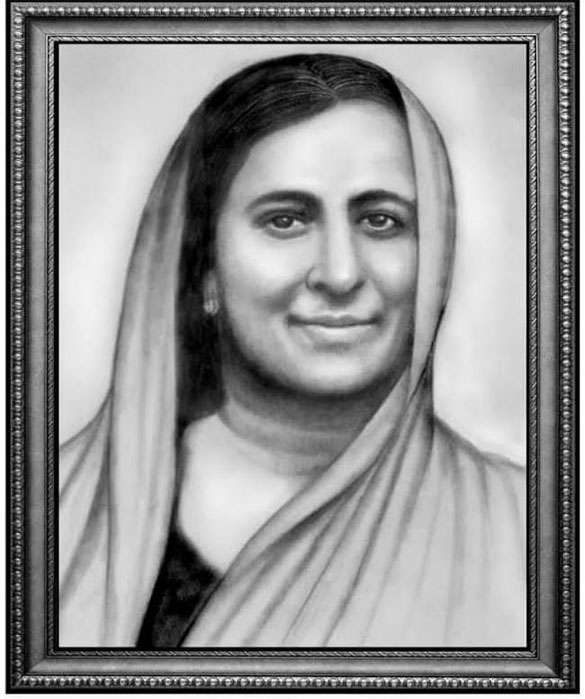
When we remember the women of India’s freedom struggle, we often remember those who stood on political platforms, went to prison or led mass movements. But there were also women who fought another battle against illiteracy, social ignorance and exclusion. One of them was Kulsum Sayani, a Gandhian, social reformer, educationist and freedom movement worker whose life was built around a simple but powerful belief: a country could not truly become free if its people remained uneducated.
Kulsum Sayani was born on 21 October 1900 in Gujarat. She grew up in a family closely connected with the national movement. Her father, Dr. Rajabali Patel, was associated with Mahatma Gandhi and Maulana Abul Kalam Azad as a physician. In 1917, Kulsum accompanied her father when she met Gandhi. That meeting left a deep impression on her, and the ideas of the national movement gradually became part of her own life. She did not simply admire Gandhi from a distance; she became involved in the social work and reform activities that surrounded the freedom movement.
Her marriage to Dr. Jaan Mohammad Sayani, himself associated with the freedom struggle, gave her further encouragement to participate publicly. But it would be wrong to remember Kulsum only as the wife of a freedom fighter. Over the years, she developed a political and social identity of her own. She became particularly concerned with people who had been left outside the reach of formal education, especially adults and women. For her, literacy was not merely the ability to read and write. It was a way of giving people confidence, awareness and a voice.
During the national movement, Kulsum became involved in teaching people who were unable to read and write and also participated in the Charkha movement. She worked in Bombay and its surrounding areas, where she connected the larger ideals of the freedom struggle with everyday social problems. Her work was especially important among Muslim women, many of whom had limited access to formal education. She believed that if women were given the opportunity to learn, the effects would reach entire families and communities.
Her commitment to adult education became even more significant in the years after the freedom struggle. In 1938, she was associated with the first National Planning Committee convened under Jawaharlal Nehru, where questions concerning education including how to reach women living within purdah were being considered. She developed a home-education approach for Muslim women in Bombay, beginning with very limited resources. According to research on women’s education in colonial India, she started with only ₹100, employed two teachers and worked personally to bring women into the programme. The initiative eventually expanded considerably.
This is perhaps one of the most remarkable things about her story: she did not wait for perfect institutions or large budgets. She started with what she had.
Her work eventually became connected with the Bombay City Social Education Committee, established to promote adult literacy. Accounts of her work describe the expansion of literacy centres under her leadership, including centres serving Muslim women. Her efforts were not restricted to one community; she saw literacy as a public good and worked towards educating adults across linguistic and social boundaries.
Kulsum also understood that newly literate adults needed material that they could actually read and understand. That led to one of the most distinctive projects of her life: Rahbar, a fortnightly publication designed for new adult readers. It was published in Hindi/Devanagari, Urdu and Gujarati scripts, using a form of accessible Hindustani. The idea was deeply connected with the linguistic vision of the national movement the belief that Hindi and Urdu did not have to become symbols of division. Gandhi himself appreciated the purpose of Rahbar. In a 1945 letter, he addressed her as “Beti Kulsum” and praised the journal’s effort to bring Hindi and Urdu together.
Years later, in 1960, Jawaharlal Nehru also intervened when government assistance to Rahbar had been stopped. In a letter to Education Minister K. L. Shrimali, Nehru described Kulsum as a person of worth and “a social worker of the best type”, noting that Gandhi had thought highly of her and encouraged her work. The Nehru Archive preserves this correspondence, giving us an unusually direct historical record of the respect she commanded from national leaders.
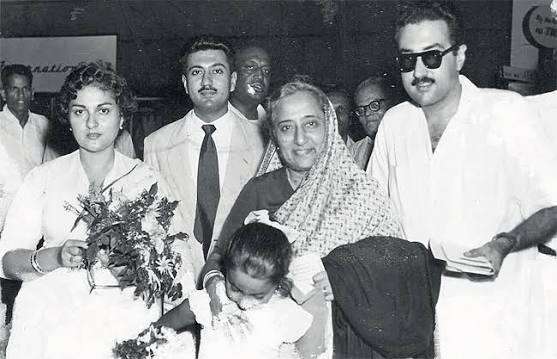
But Kulsum’s work was never only about literacy classes. She was also involved in the Indian National Congress’s Jan Jagaran programmes, which sought to create public awareness about social problems. She believed that political freedom and social reform had to move together. What was the point of ending colonial rule if people remained trapped by ignorance, inequality and social prejudice?
Her public work expanded further when she became associated with the All India Women’s Conference. Records from the organisation’s 1944 and 1946 committees list Mrs. Kulsum Sayani as Honorary General Secretary. This placed her among a generation of women working nationally on questions of education, social reform and women’s rights.
There was also resistance to her work. Accounts of her life note that some Muslim League leaders in Bombay opposed her Congress-oriented social activities, believing that she was drawing poorer communities towards the Congress. Rather than stepping back, Kulsum continued her work. This is an important part of her story because it shows that her path was not politically convenient. She was working in a period when questions of community, nationalism and political identity were becoming increasingly complicated. Yet she continued to focus on the people she wanted to reach.
Her contribution did not end with Independence in 1947. In many ways, her real life’s work continued after the British left. India now had the responsibility of educating its own citizens, and Kulsum remained deeply involved in adult education and women’s empowerment. She travelled internationally, attended conferences and training programmes, and represented India in discussions on education. A 1960 letter from Nehru records that she had recently returned from Denmark, where she had attended training courses in adult education.
Her contribution was eventually recognised by the Indian state. Kulsum Sayani received the Padma Shri in 1960 for Social Work, according to the official Padma Awards database. She also received recognition for her contribution to literacy, and she wrote on adult education, women’s participation in the freedom movement, social service and India-Pakistan friendship. Her writings included Proudha Siksha mein Mere Anubhav, Bharateeya Swatantra Sangram mein Mahilaon ki Bhumika and Bharat-Pak Maitri – Mere Prayatn.
There is another reason why Kulsum Sayani’s story feels particularly relevant today. Her work reminds us that freedom is not only political. A person who cannot read a letter, understand a government notice, access information or participate in public discussion is still living with a form of dependence. Kulsum understood this decades ago. She saw education as a tool through which ordinary people especially women could become more confident participants in society.
She also challenges the way we sometimes tell the story of Muslim women in the freedom movement. The contribution of Muslim women is often reduced to a few famous names, while women who worked at the grassroots level disappear from public memory. Kulsum Sayani’s struggle was quieter. She was not remembered primarily for one dramatic protest. Her resistance happened in classrooms, neighbourhoods, women’s gatherings, publications and social campaigns.
She fought ignorance as fiercely as others fought colonial rule.
And perhaps that is what makes her story so powerful.
Kulsum Sayani died on 27 May 1987, leaving behind a life that connected the freedom struggle with the much longer struggle for education and social dignity. She had lived through the nationalist movement, Independence, Partition and the difficult work of building a new country. Her legacy was not a monument or a political office. It was the thousands of people who learned to read, the women who entered educational spaces, the new readers who found Rahbar, and the belief that knowledge should not belong only to those who could afford it.
Perhaps the simplest way to remember her is this:
For Kulsum Sayani, Independence was not simply the moment the British left India. It was the moment ordinary Indians had to begin learning how to shape their own future. And she spent her life helping them do exactly that.
Kulsum Sayani (1900–1987)
Freedom fighter. Educationist. Social reformer. A pioneer of adult literacy.
She reminds us that sometimes the most powerful way to build a free nation is not to stand at the front of a crowd but to sit beside someone and teach them to read.
Her Story. Our Heritage.
Awaz-e-Khwateen