Story by Tooba Khatoon | New Delhi |
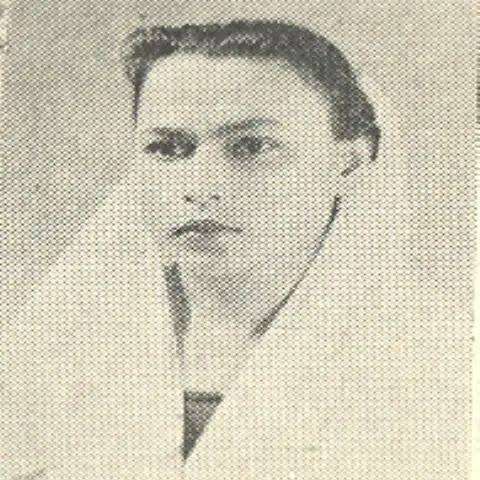
There are some names in history that become famous because they belonged to powerful families, held important offices, or remained in public life for decades. And then there are names like Mofida Ahmed women who entered public life at a time when very few women did, achieved something historic, and then slowly disappeared from public memory.
In 1957, Mofida Ahmed was elected to the Lok Sabha from Jorhat, Assam, becoming Assam’s first woman Member of Parliament and one of the earliest Muslim women to enter India’s Parliament. She represented the Indian National Congress and served during the Second Lok Sabha from 1957 to 1962.
Her achievement becomes more striking when we remember the period in which it happened. India was only a decade old as an independent republic. Parliament itself was a new institution, and women were still a small presence in electoral politics. Assam, too, had very few women in public life. Mofida did not simply win an election; she entered a political space that had hardly made room for women before her. A study of women’s representation in Assam notes that she was the state’s first woman MP, while the later history of women in the state’s Lok Sabha representation remained sparse for decades.
Before Parliament, there was public service
Mofida Ahmed was born in Jorhat in 1921 and pursued her education privately. That detail may appear small today, but it tells us something about the educational circumstances of women of her generation. She later wrote for Assamese journals and was also associated with literary work; accounts of her life mention books including Biswadip-Bapuji and Bharatar-Nehru. Politics was not where her public life began.
Before reaching Parliament, she had already spent years working with organisations connected to social welfare. Between 1946 and 1949, she served as Joint Secretary of the Red Cross Society in Jorhat. She later worked with the Tezpur District Mahila Samiti and was associated with the Jorhat Civil Hospital Advisory Committee and the Jorhat Blind School. The Muslim Women’s Forum’s Pathbreakers project describes her work more broadly as being closely connected with women’s education and institutions such as Jagannath Barooah College and DCB Girls College.
This part of her story is important because Mofida did not suddenly appear in 1957 as a politician looking for an election ticket. There was already a record of community work behind her.
She had also worked in the National Savings Scheme in an honorary capacity between 1957 and 1958, according to biographical records, and had served as Convener of the Women’s Department of the Congress at Golaghat from 1953 to 1956. Her political work, therefore, grew alongside her social work.
A woman in the Congress organisation
Mofida’s association with the Congress Women’s Department is worth noticing. Political participation for women in the early decades after Independence often began at the grassroots with organising, social work, women’s groups, welfare activities and election work rather than immediately through electoral office. Mofida was part of that transition.
She worked with women, with social organisations and within the Congress structure before eventually contesting the Lok Sabha election. By the time she stood from Jorhat in 1957, she had already spent years building a public identity outside the home. And then came the election.
She won the Jorhat parliamentary constituency, defeating Communist Party of India candidate Syed Abdul Malik. Election records show that she secured 80,028 votes, while Malik received 33,713. For Jorhat, it was a significant moment. For women in Assam, it was even more so.
What did her being a Muslim woman mean in that Parliament?
It is tempting to look at Mofida’s identity only through the word first. First woman MP from Assam. One of the first Muslim women MPs in India. But that can sometimes make a person’s life look like a list of achievements rather than a lived experience. Mofida was a woman from Jorhat, working within Assam’s social and political landscape, who entered Parliament at a time when the idea of a woman particularly a Muslim woman occupying a national political role was still unusual.
The Pathbreakers project of the Muslim Women’s Forum places her among Muslim women who participated in building post-Independence India rather than remaining outside its political and social institutions. It specifically describes her as someone who dedicated her life to women’s education as a means of achieving gender equality. That may be the most useful way to remember her. Not simply as “the first woman MP”. But as someone who saw education and public participation as connected.
Parliament was only one part of her story
There is something refreshing about looking at Mofida’s life beyond the Parliament building. The records that remain show a woman moving between different kinds of public work social welfare, women’s organisations, education, writing and politics. She was not confined to a single role.
Even her literary side is easy to overlook. She contributed articles to Assamese journals and wrote about national figures and public life. Her writings included Biswadip-Bapuji and Bharatar-Nehru. This tells us something about the kind of public woman she was. Politics was not separate from her interest in society. Writing, education, welfare and political work all seem to have occupied the same broad space in her life: participation.
A small glimpse from the parliamentary record
There is also an interesting surviving trace of Mofida in the Nehru Archive. In September 1958, Prime Minister Jawaharlal Nehru wrote to her regarding a complaint she had made about the sub-letting of MPs’ flats and bungalows. Nehru told her he was asking the Parliamentary Housing Committee and the Congress Party to take action.
It is a small piece of correspondence, and perhaps not the sort of thing that normally appears in biographies. But these small records are valuable. They remind us that Mofida was not merely a name attached to an election result. She was an active parliamentarian, corresponding with the Prime Minister and raising matters concerning parliamentary functioning. History is often reconstructed from exactly these fragments.
Why did we forget her?
Mofida Ahmed died in 2008, aged 88. When newspapers reported her death, they remembered her as Assam’s first woman Member of Parliament. But outside Assam, her name remains relatively unfamiliar. Perhaps that is one of the problems with the way we remember women’s political history. We tend to remember women who remained in the national spotlight for decades. Those who made an important entry into public life and then returned to quieter forms of work are much easier to lose from the story. Mofida’s life deserves more than a footnote.
She belonged to a generation that had to build the institutions of a new India while also finding its own place within them. She worked before she was elected, represented her constituency when very few women were in Parliament, supported women’s education, contributed to social welfare and wrote alongside her public work.
And there is something deeply human about that trajectory. She did not begin with Parliament. She began with the work around her. The organisations, the women, the schools, the welfare institutions, the community and eventually, the ballot box.
That is perhaps the best way to remember Mofida Ahmed today: not simply as Assam’s first woman MP, but as a woman who gradually built a place for herself in public life at a time when there were very few precedents to follow. Her election in 1957 opened a door.
The women who came after her walked through it. And the fact that many of us have forgotten who opened that door is precisely why her story deserves to be told again.