Story by Tooba Khatoon | New Delhi |
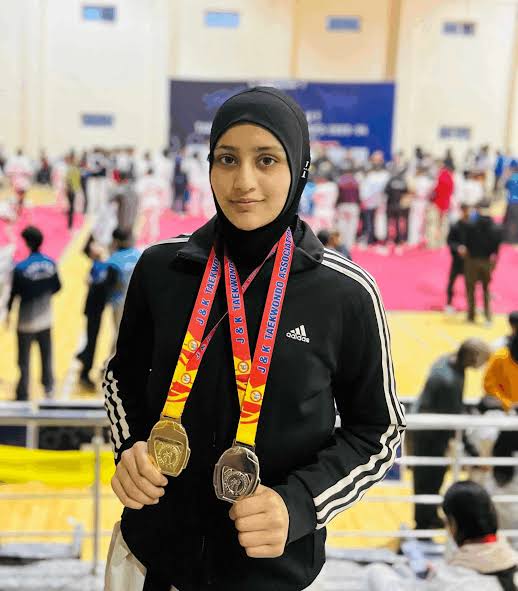
When Misbah Fatima scored 85% in her Class 11 examinations, it was certainly an achievement worth celebrating. But in Doda, Jammu and Kashmir, her report card tells only half the story. Alongside her studies, Misbah has built a name for herself in Taekwondo, winning medals at the state and national levels and participating in competitions such as the Khelo India Women’s Taekwondo League. Her story is a reminder that for many young women, education and sport do not have to be competing choices. With the right support, they can become two parts of the same journey.
Misbah’s story also draws attention to the growing presence of Muslim women in Indian sport. Their participation, however, cannot be understood simply through the lens of religion. Geography, family circumstances, economic background, access to training and the availability of safe sporting spaces all influence whether a young girl is able to continue in sport. For a girl growing up outside India’s major sporting centres, reaching the national level can require much more than talent. It requires access to coaches, equipment, competitions, transportation and opportunities.
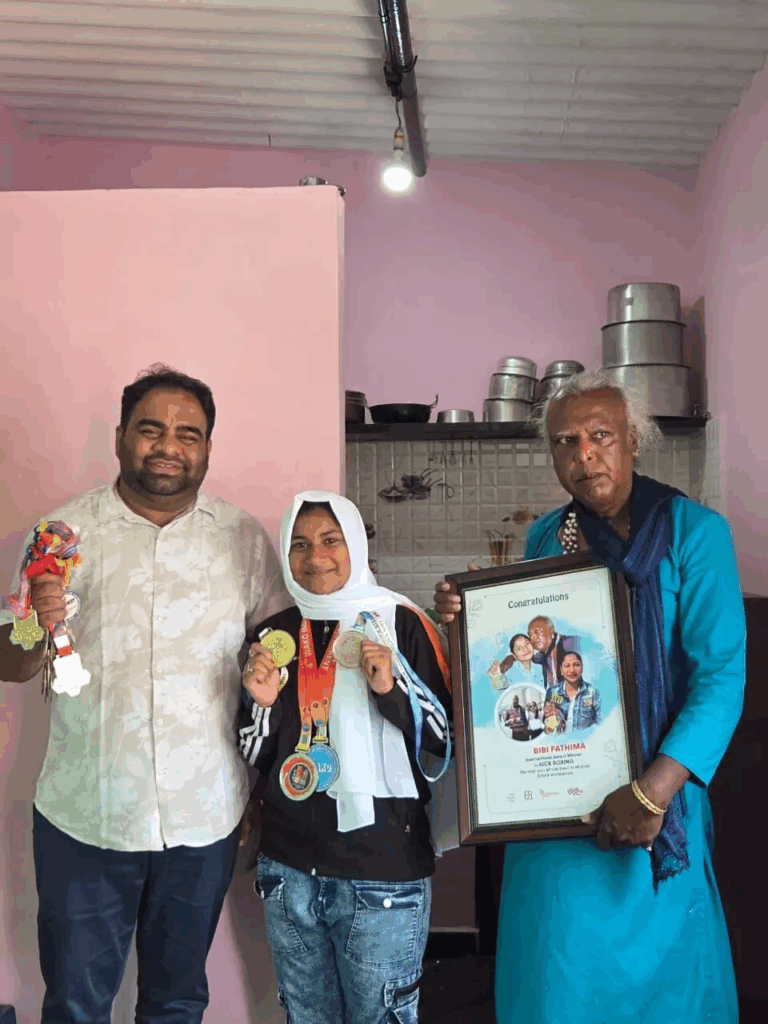
The story of Bibi Fatima from Mysuru reveals another side of this struggle. Having trained in kickboxing for around twelve years, she has reportedly won 29 gold medals at district, state and national championships. She even continued competing after suffering a hand injury and went on to win two silver medals at an international tournament in New Delhi. But behind those medals is a childhood marked by severe financial and family hardship. According to reports, after her father left the family, Bibi and her mother were supported by Akram Pasha, a transgender person in Mysuru who helped provide them with shelter and supported Bibi’s education and training.
Today, Bibi dreams of representing India at the Olympics. Yet the distance between winning medals and becoming an Olympic athlete is enormous. Training, equipment, travel, nutrition and participation in competitions all require money. For athletes from economically vulnerable families, talent alone cannot guarantee a sporting career. Bibi’s ambition to eventually establish her own kickboxing centre also reflects another dimension of her dream: becoming financially independent while supporting the person who stood by her family during its most difficult years.
Stories like these challenge the way we usually discuss Muslim women in sport. Too often, the conversation begins and ends with questions of restrictions, clothing or social expectations. These factors can matter, but they are only part of a much larger picture. Research on Muslim women’s participation in sport points towards several interconnected barriers, including limited facilities, financial constraints, lack of role models, family and social expectations, and the absence of clear pathways from recreational participation to professional sport.
The more important question, therefore, is not whether Muslim girls have sporting talent. Misbah and Bibi demonstrate that they clearly do. The question is how many talented girls never get the opportunity to find out what they are capable of. A girl may have the ability to become a national athlete but leave training because her family cannot afford the costs. Another may have the ambition but no suitable facility nearby. Someone else may win at district level but find no financial or institutional support to continue.
This is where sporting institutions, schools, communities and government programmes have an important role to play. Encouraging girls to participate is only the beginning. They need affordable training, safe facilities, scholarships, qualified coaches, competition opportunities and sustained support. Muslim women athletes also need to be seen beyond the stereotypes often attached to them not simply as women who have “overcome” their backgrounds, but as athletes whose abilities deserve the same serious investment as anyone else’s.
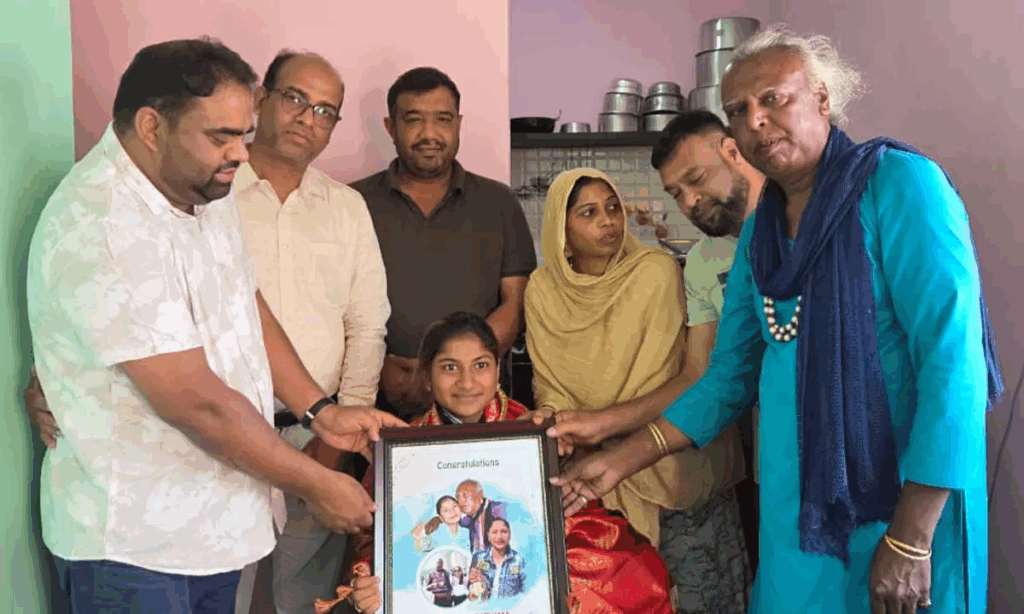
Misbah’s Taekwondo medals and Bibi Fatima’s kickboxing victories are therefore more than individual accomplishments. They represent two different journeys through which young Muslim women have claimed space in Indian sport. One is balancing academics with athletic ambition; the other is fighting through extraordinary personal and financial circumstances to keep an Olympic dream alive.
A medal may be won in a few minutes inside a ring or on a competition floor. The journey towards that medal can take years. And for many young women, the first challenge is not winning the competition it is getting the opportunity to enter it.
Sources: Brighter Kashmir, July 17, 2024; The Hans India, “Mysuru’s Bibi Fatima: A Kickboxer’s Journey of Determination”; research literature on Muslim women’s participation and barriers in sport.