**آہ کو چاہیے اک عمر اثر ہونے تک
کون جیتا ہے تری زلف کے سر ہونے تک**
Aah ko chahiye ek umr asar hone tak,Kaun jeeta hai teri zulf ke sar hone tak.
“A heartfelt cry takes a lifetime before it leaves its mark; who lives long enough to witness every struggle reach its conclusion?”
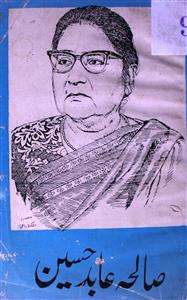
Although these famous lines are often associated with the literary world that shaped generations of Urdu writers, they also capture the journey of Saliha Abid Hussain a woman who understood that real change never arrives overnight. It begins with a thought, grows into a conversation, and eventually transforms society.
Although these famous lines are often associated with the literary world that shaped generations of Urdu writers, they also capture the journey of Saliha Abid Hussain a woman who understood that real change never arrives overnight. It begins with a thought, grows into a conversation, and eventually transforms society.
Today, we celebrate women who speak boldly about equality, education and independence. But nearly a century ago, when such conversations were almost unthinkable, Saliha Abid Hussain was already asking difficult questions through her novels. She never shouted from a stage. She simply wrote. And her words travelled farther than she could have imagined.
“Some people change history by leading movements. Others change it quietly, by changing the way people think.”
If there is one Urdu writer who fits this description, it is Saliha Abid Hussain.
Imagine North India in the 1930s.
A young girl finishes her household chores and quietly opens a book. She has dreams of studying further, perhaps becoming a teacher or a writer. But before those dreams can take shape, conversations about her marriage begin. Nobody asks what she wants. Education is considered enough if it makes her a “good wife.” Her world is small, and her future has already been planned by others.
For thousands of women, this was not fiction. It was everyday life.
It was this world that Saliha Abid Hussain observed so closely. Instead of raising slogans, she wrote stories. Instead of attacking society, she held up a mirror to it. That mirror was often uncomfortable to look into.
A Childhood Filled with Books
Saliha Abid Hussain was born as Misdaq Fatima on 18 August 1913
in Panipat. She belonged to a family where books, discussions and education were part of everyday life. Her maternal family traced its lineage to the great Urdu poet and social reformer Maulana Altaf Hussain Hali, whose writings had already begun questioning social practices and advocating education, especially for women
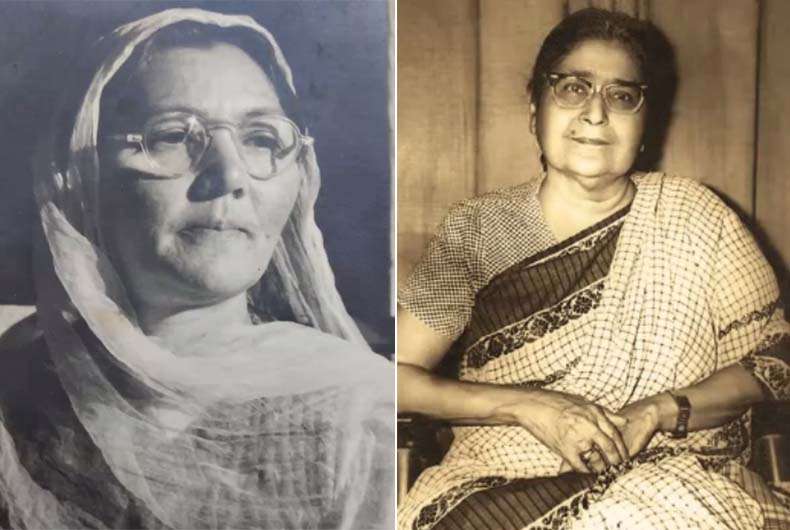
Her father, Khwaja Ghulam-us-Saqlain, was a scholar and editor. Unfortunately, he passed away when Saliha was only two years old. Yet the family’s intellectual atmosphere remained intact. Since there was no proper school for girls in Panipat at the time, her uncle established the Hali Muslim Girls School, where she received her early education. Looking back, it almost seems symbolic. Before she could write about educating women, someone in her own family had already begun creating spaces where girls could learn.
The Novel That Started Conversations
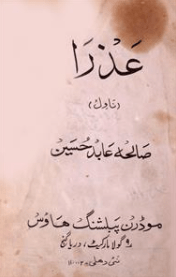
In 1935, Saliha published Azra. At first glance, it appears to be a novel about ordinary people. But as readers moved through its pages, they realised it was asking extraordinary questions.
Why should a girl’s future be decided without asking her opinion?
Can education stop at reading and writing, or should it help a woman think independently?
Why should marriage be a social obligation instead of a partnership?
These were not easy questions in the 1930s. Saliha never wrote to shock people. She wrote to make them pause. Her characters were daughters, wives and mothers not superheroes. Readers recognised them because they looked like women from their own families.
Perhaps that is why Azra became so significant. It did not feel like a lecture. It felt like life itself. One of the biggest misunderstandings about Saliha Abid Hussain is that she was simply writing about “women’s issues.”She was actually writing about society. She believed that when half the population is denied education, discouraged from making decisions and made financially dependent, the entire society suffers.
Again and again, her fiction returned to certain themes—mismatched marriages, dowry, divorce, social pressure and the economic dependence of women. These were not random literary choices. They reflected the realities she witnessed around her.
A Thought That Still Feels Relevant
Although there are very few verified standalone quotations available from Saliha Abid Hussain’s published works, one idea runs consistently through her writing:Education should give a woman not only knowledge but also the confidence to make her own decisions. Reading her novels today, one realises that she was never asking women to reject their families or traditions. She was asking society to trust women as thinking human beings.
That difference is important.
Many readers know Saliha because of Azra, but her literary world was much larger. She wrote novels, short stories, plays, biographies, children’s literature and literary criticism. Her important works include Aatish-e-Khamosh, Saatvan Aangan, Qatre Se Gohar Hone Tak, Rah-e-Amal, Apni Apni Saleeb, Yadon Ke Chiragh, Yadgar-e-Hali, Jane Walon Ki Yaad Aati Hai and several collections for young readers. Her language was simple and elegant. She believed that literature should be understood by ordinary people rather than admired only by scholars.
Jamia and a Life of Purpose
After marrying the noted educationist Dr. Syed Abid Husain in 1933, Saliha became closely associated with the intellectual environment of Jamia Millia Islamia. The university was then emerging as a centre of educational reform and nation-building. Friends and family later described her as one of the quiet forces who helped shape Jamia’s culture of learning, even if she rarely stood in the spotlight herself. Perhaps that is why she never separated writing from education. For her, both had the same purpose to make people think.
By the time the Government of India honoured Saliha Abid Hussain with the Padma Shri in 1983, she had already written dozens of books and influenced generations of Urdu readers. Yet she remained remarkably modest. Those who knew her often described her as someone more interested in meaningful work than public recognition.
Why Should We Read Her Today?
A young woman in 2026 has opportunities that many women in the 1930s could never have imagined. She can attend university, become a lawyer, start a business or enter the civil services. Yet many of the questions Saliha raised have not disappeared.
Should daughters be allowed to choose their careers freely?
Why do educated women still leave the workforce after marriage?
Why do financial decisions in many households remain unequal?
How do we balance tradition with individual choice?
Reading Saliha Abid Hussain today is not about returning to the past.It is about realising how many conversations she began nearly ninety years ago—and how many of them are still unfinished.
Remembering Saliha
History often remembers rulers, freedom fighters and politicians. But societies are also shaped by writers. A law can change behaviour overnight. A novel can change the way people think for generations. That is what Saliha Abid Hussain achieved. She never demanded attention. She simply wrote honestly about the lives of ordinary women. And perhaps that is why, even today, when we turn the pages of Azra, we do not feel as though we are reading an old novel.
We feel as though someone from another century is gently asking us a question that still deserves an answer.