
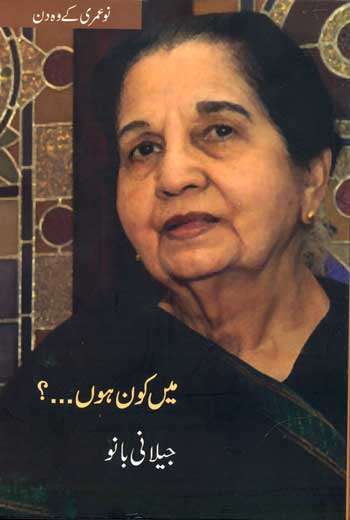
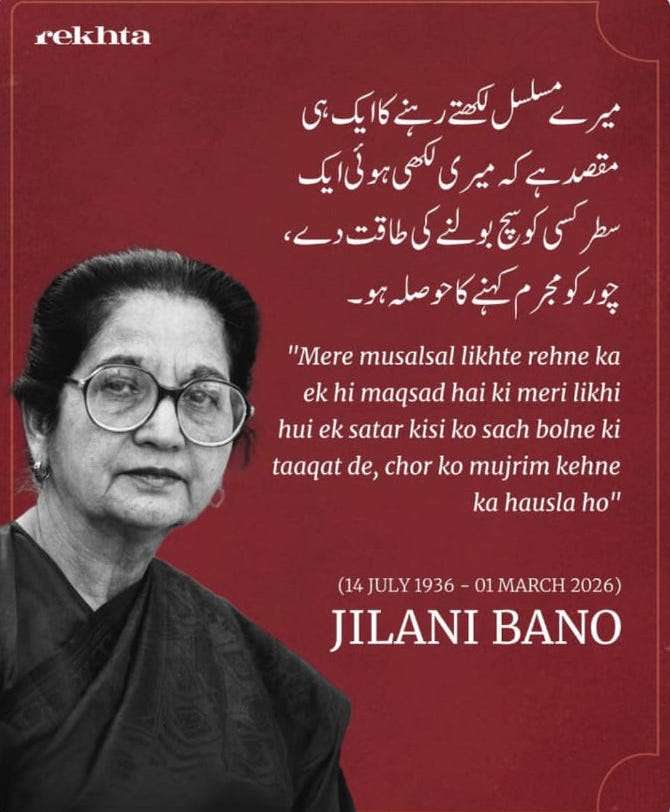
In the world of Urdu literature, some voices rise beyond the pages of books and become a part of society’s collective memory. Jilani Bano was one such voice powerful, compassionate, and deeply reflective of the human experience. For decades, her writing illuminated the complexities of society, especially the lives, emotions, and struggles of women. Through her stories and novels, she gave expression to voices that often remained unheard. Born with an innate sensitivity toward social realities, Jilani Bano began her literary journey in the mid-1950s. At a time when women writers were still finding space in the literary world, she emerged with remarkable confidence and originality. Her works were not merely pieces of fiction; they were mirrors of society, portraying both its beauty and its contradictions.
With each story, she explored themes of identity, injustice, resilience, and hope. Her celebrated novels, including Aiwan-e-Ghazal and Barish-e-Sang, stand as landmarks in modern Urdu fiction. These works captured the social transformations of their time and portrayed the emotional depth of characters navigating changing realities. Jilani Bano had the rare ability to blend poetic sensitivity with social critique, making her narratives both moving and thought-provoking.
Over the years, her literary contributions expanded across various forms short stories, novels, radio plays, and even literature for children. Her writings crossed linguistic boundaries and were translated into several languages, including English, Russian, and various Indian regional languages, bringing her voice to readers far beyond the Urdu-speaking world. Her extraordinary contribution to literature was widely recognized. She was honored with the Padma Shri and received prestigious accolades such as the Ghalib Award and the Soviet Land-Nehru Award. Universities and literary institutions celebrated her achievements, and she was also conferred an honorary Doctor of Literature degree in recognition of her profound impact on the literary landscape.
Yet Jilani Bano’s legacy extends beyond literature. She was deeply committed to social causes, particularly the empowerment of women. As a leader and chairperson of several organizations, she worked tirelessly to support initiatives that uplifted women and strengthened their voices in society. For her, writing and social engagement were intertwined both were ways of speaking truth and inspiring change. Today, as we remember Jilani Bano, we remember more than a celebrated novelist. We remember a voice that transformed stories into instruments of awareness and empathy. Her words continue to inspire readers, scholars, and writers, reminding us that literature has the power to question, to heal, and to unite. Though the writer has departed, her voice remains alive in every page she wrote. And in the hearts of readers who return to her stories, that voice will continue to speak clear, courageous, and timeless.