I believe every writer’s very first stanza or ghazal is almost always written for their mother. That’s where the journey begins.
Mohsin Mushtaq
NEW DELHI: Late in the autumn of 2023, 21-year-old Muskan Majeed lay in a hospital bed in New Delhi, her body grounded by illness and her singing voice silenced for six long months. The timing felt cruel. Her classical vocal training under her master, Harishankar, was put on pause, and her classes at Jamia Millia Islamia had to be put on hold. Outside her bedroom door, whispers from well-meaning acquaintances drifted in: She’s done. She won’t accomplish anything now.
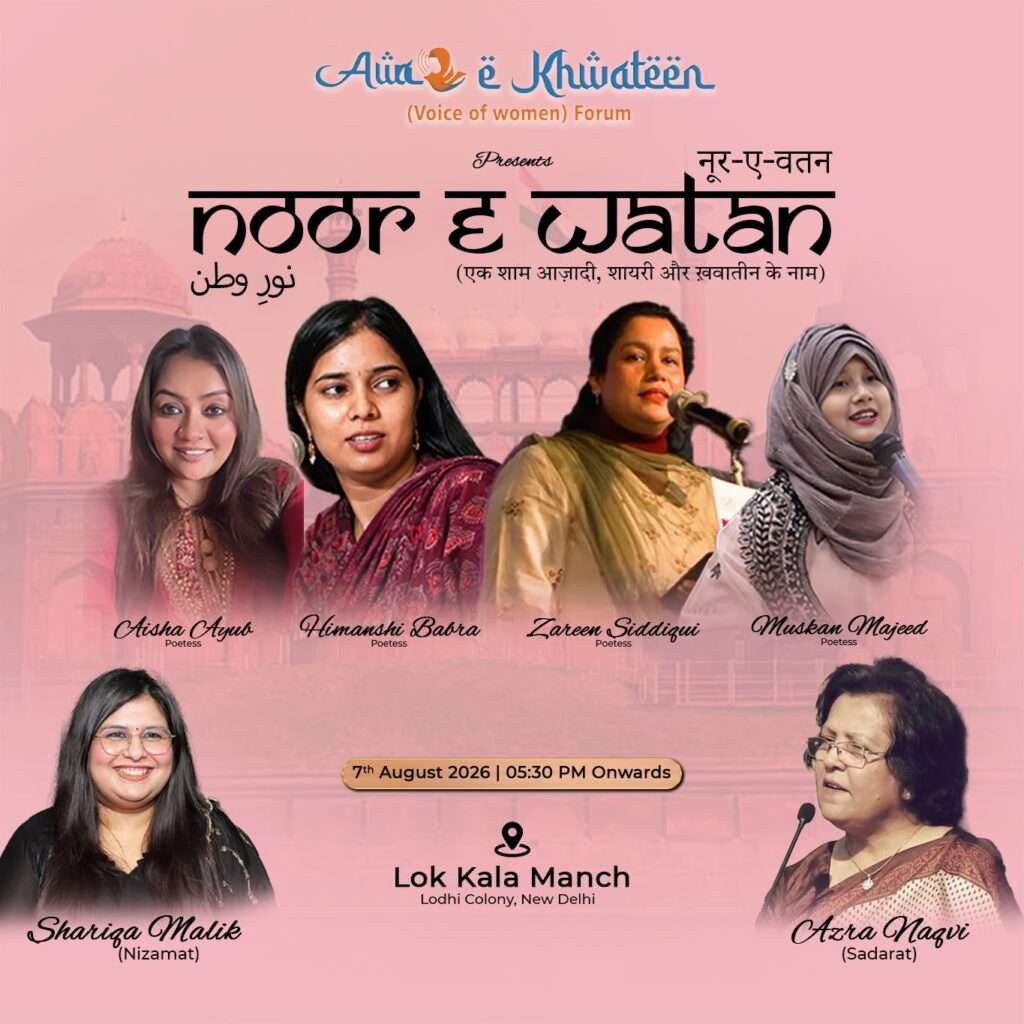
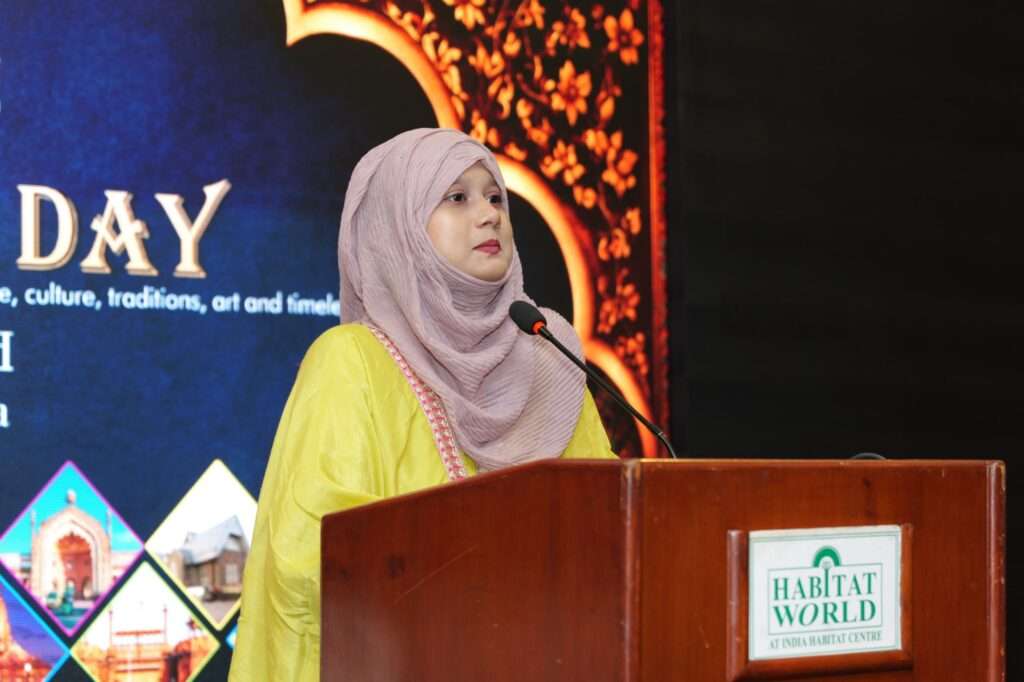
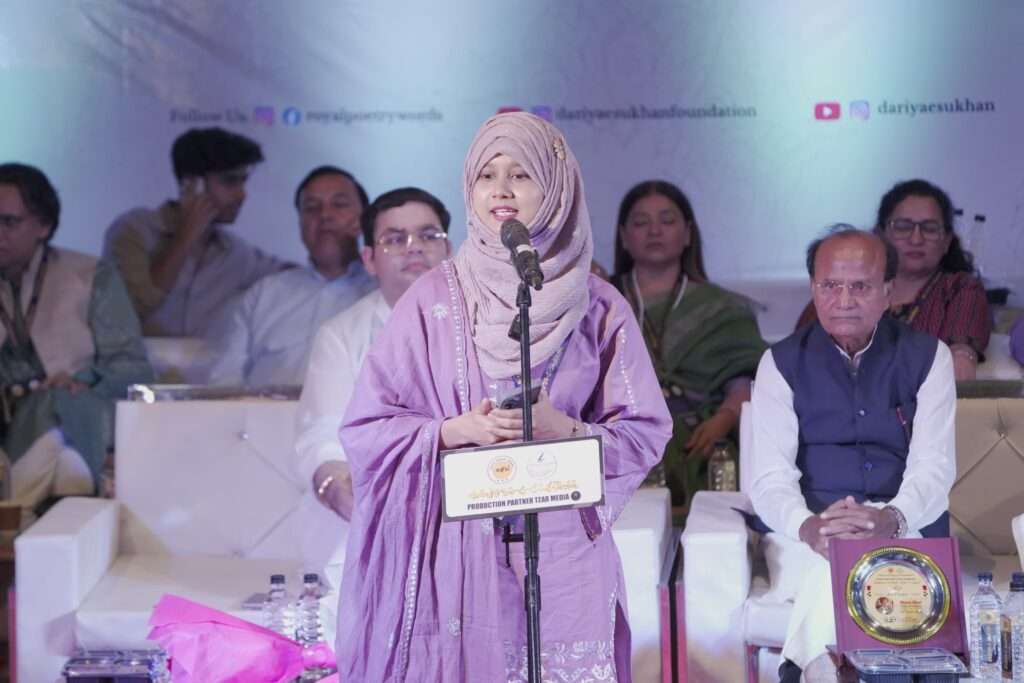
Instead of letting those words crush her, Muskan turned to a notebook and began to write. Less than two years later, that same young woman stood under the bright lights of prestigious cultural stages like Jashn-e-Adab, Noor-E-Watan captivating audiences not with song, but with the quiet, rhythmic power of her Urdu poetry.
Now an MBA graduate from Teerthanker Mahaveer University (TMU) with her sights set on a Ph.D. and a career as a university professor, Muskan lives at the crossroads of artistic passion and structured academic ambition. Her journey from scribbling heartfelt lines in notebook margins to commanding real and virtual stages reveals a story of quiet resilience, family influence, and an unyielding devotion to the spoken word.
Echoes of a Heritage: The Spark of Poetic Impulse
For Muskan, poetry was not a deliberate career choice made in adulthood; it was an atmosphere she inhaled growing up. Her artistic roots run deep into her family tree, nurtured primarily under the subtle influence of her late uncle, Aziz Rabbani, who was himself deeply embedded in the world of Urdu poetry for over five decades.
“My first priority was, and in many ways still is, music,” Muskan shares, reflecting on her early creative leanings. “Singing came first. But I grew up watching my elder uncle, Aziz Rabbani, who spent over 50 years in the field of poetry (shayari). I listened to him from my childhood. Sadly, he passed away shortly before I stepped into this field professionally, but the habit of listening to him created that inner desire to write.”
That instinct manifested early. By the time Muskan was in the fourth or fifth grade at Delhi Public School, in her native village Champalan Bihar, Muskan was already penning preliminary lines. Like many young writers, her initial verses were simple reflections of her immediate world, tributes to her parents and random observations of daily life.
“Back then, I didn’t even know what poetry (shayari), meter (beher), or rhythm actually meant,” she recalls
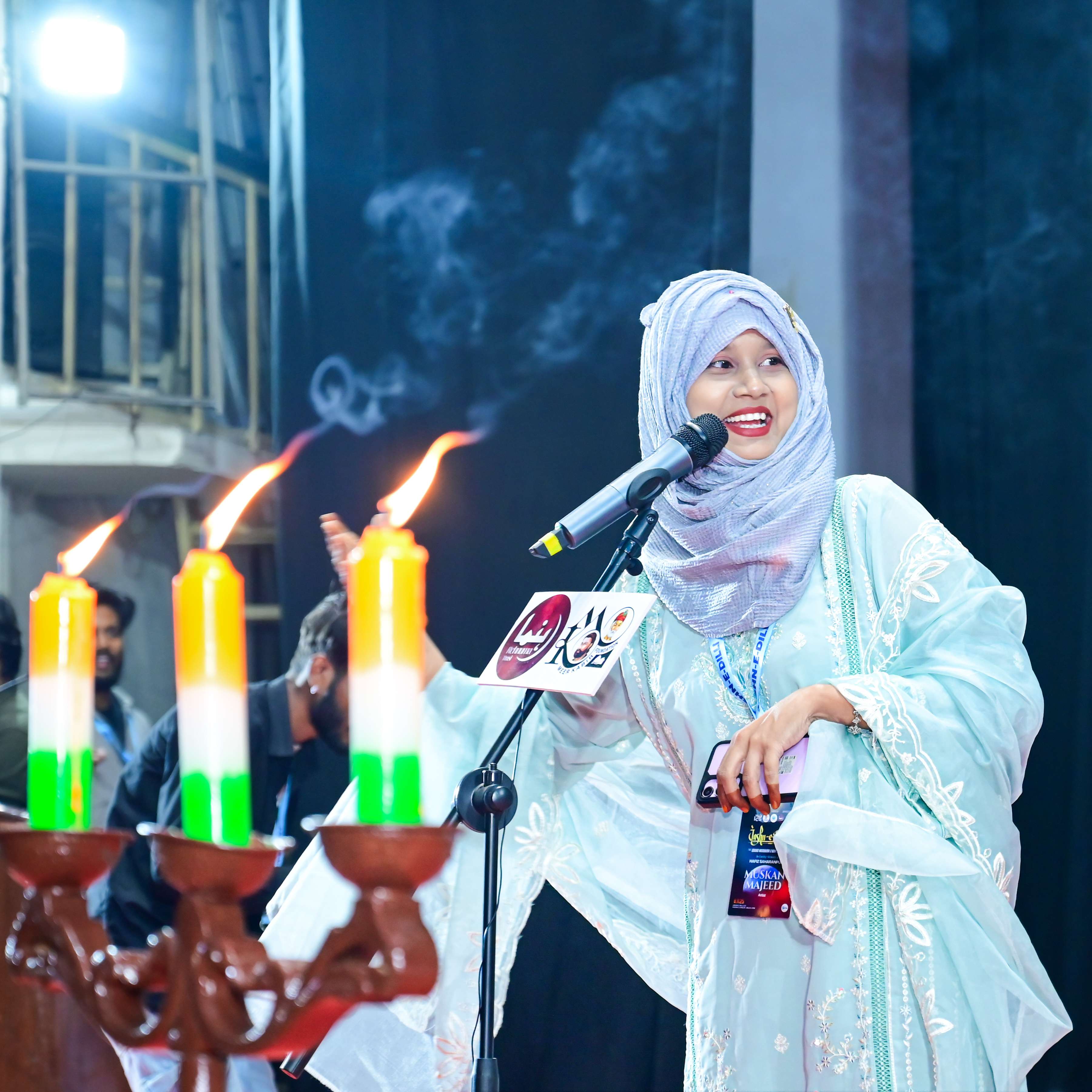
with a smile. “I would just walk around, thoughts would pop into my head, and I’d write them down. I believe every writer’s very first stanza or ghazal is almost always written for their mother. That’s where the journey begins.”
The Digital Shift and the Viral Breakthrough
Despite her early love for writing, Muskan’s initial public performances were hesitant and rare. In 2023, she made her formal debut on the open-mic circuit, paying out-of-pocket to perform at local venues. For months, her creative output remained largely personal. However, the landscape shifted dramatically when she began sharing recordings of her recitations on social media.
Six to seven months after her initial performances, clips of her poetry went viral online, gathering millions of views. Her soft delivery, combined with relatable emotional depth, struck a chord with internet audiences.
“I had no knowledge of advanced poetic meter or formal ghazal structures back then,” Muskan admits. “They were just raw feelings. But after those videos went viral, I was invited as a guest artist to a formal nashist (poetic gathering). Receiving appreciation from seasoned listeners there made me realise: this is something meaningful, something I can truly pursue.”
Recognising that passion required discipline, Muskan set out to master the craft formally. Over the past two years, she immersed herself in books on Urdu grammar, poetic meter (beher), and traditional ghazal compositions, transforming from an intuitive writer into a trained verse maker.
Navigating Family, Doubts, and Social Stigmas
Stepping into the public eye as a young Muslim woman from a traditional background comes with its unique set of challenges. For Muskan, navigating external perceptions required both tactical discretion and strong familial backing.
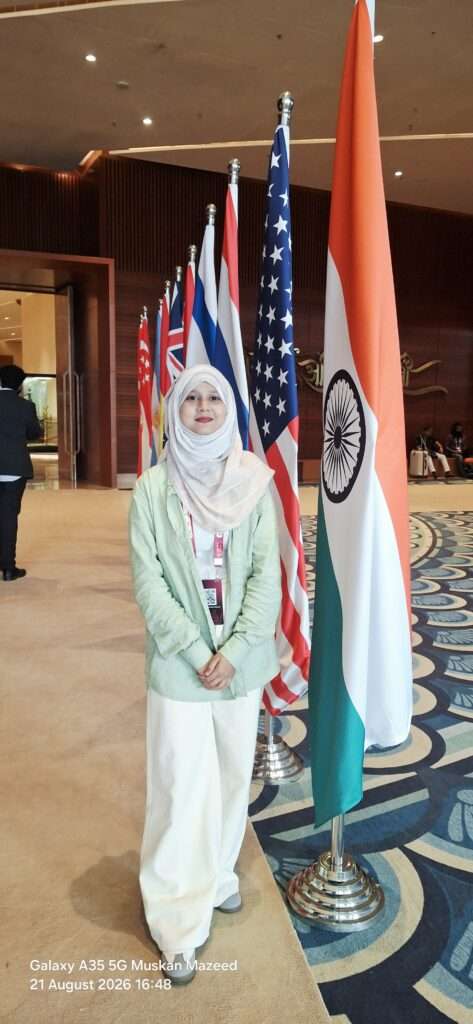
While her immediate family, her father, Mohammad Majeed, and her mother, offered unwavering encouragement, external societal judgments posed an initial hurdle.
“There are always two sides: your maternal family and your paternal family,” Muskan explains. “On my maternal side, some relatives held rigid mindsets regarding girls performing publicly or being on stage. To avoid unnecessary friction or negative comments early on, I actually blocked many relatives on social media for over a year. I didn’t want their skepticism to demotivate me before I even had a chance to build my ground.”
That caution proved wise. As Muskan gained recognition and established herself on respectable platforms like Jashn-e-Adab, Noor E Watan, those early anxieties faded.
“My parents have been my biggest pillar of support,” Muskan says. “They told me, ‘Whether you want to pursue music, singing, or poetry, do what your heart desires, as long as you do it with dedication.’ When your parents stand behind you, the noise from the rest of the world doesn’t matter.”
Behind the spotlight, Muskan’s path was fraught with challenges that repeatedly tested her grit. In 2023, a major health setback forced her to take a six-month hiatus from Jamia Millia Islamia and put her music lessons on hold. Bedridden and vulnerable, she had to endure not just physical recovery, but the stinging doubts of those around her.
“When you are bedridden and people around you say, ‘She’s done, she won’t accomplish anything now,’ it hurts deeply,” Muskan reflects. “But moving to Moradabad for two years to pursue my MBA at TMU, living in a hostel, gave me my confidence back. It made me realise that I am capable of achieving whatever I set my mind to.”
Academic Ambitions and the Future of the Craft
Today, Muskan stands at a pivotal junction. Having completed her MBA from TMU, she is actively preparing to pursue a Ph.D., aiming for a career as a university professor in management studies. While corporate job opportunities – including offers in Dubai – have presented themselves, Muskan remains clear about her priorities: academia, poetry, and entrepreneurial ventures in event and profile management.
When asked about broader cultural concerns, such as the widely held belief that the Urdu language is gradually dying among younger generations, Muskan dismisses the notion with calm conviction.
“No language can ever truly die,” Muskan asserts firmly. “Urdu doesn’t belong to any single religion or community – it is a language of expression. Non-Muslims read and write Urdu just as passionately as Muslims do. As long as there are poets, writers, and lovers of literature, the language will remain vibrant and alive.”
At just 21 years old, Muskan’s message to other young women attempting to break out of restrictive environments is straightforward and pragmatic.
“First, win over your parents,” she advises. “If your parents understand your passion, they become your greatest strength. Secondly, don’t let temporary demotivation stop you. When you stay consistent for a year or two, people eventually stop questioning you and start respecting your work.”
As she prepares for her next academic chapter and continues to write, Muskan remains grounded in the values instilled by her family.
“People often tell me after mushairas to stay as humble as I am today,” she reflects. “That humility isn’t a strategy; it’s what my parents taught me. Fame comes and goes, but how you treat people is what truly remains.”
(Mohsin Mushtaq is the Consultant – Associate Digital Media and Communications at Awaz-E-Khwateen).