
’History often forgets women, but some women become history themselves. Fatima al Fihri was one such woman.’’
Awaz-e-Khwateen exists for the empowerment and recognition of women whose voices history has often tried to silence. We stand for education, dignity, leadership, and justice because these are not privileges, but rights. In this journey, we are reminded by women like Fatima al-Fihri that Muslim women were never meant to remain on the margins of knowledge or power. Her life teaches us that education is not a gift bestowed upon Muslim women, it is their rightful inheritance. Leadership was never unknown to Muslim women it was lived, practiced, and passed on, even when later narratives chose to erase it. To empower a Muslim woman is not merely to change her circumstances, it is to change families, communities, and the course of history itself.

Born in the 9th century in an educated and successful family in Qayrawan, Tunisia. Fatima grew up in an environment where knowledge was cherished as an act of worship. Her Father made sure his daughters were taught Fiqh, Hadith, and etiquettes of serving others-a fact that acts to debunk many modern misconceptions about Muslim women. Later, when her family migrated to Fez, Morocco, fate put Fatima to one of its bitterest tests through personal loss. Her father and then husband having died, she fell heir to the bulk of the fortune. And what followed was not withdrawal or silence but vision. The first woman in Islamic history to establish a university was Fatima, who perceived wealth as an amanah (trust) that was meant for uplifting the community. Deep faith and lifelong love for learning were the cornerstones on which she decided to commit her resources for gifting to humanity an institution that would serve humanity generation after generation.
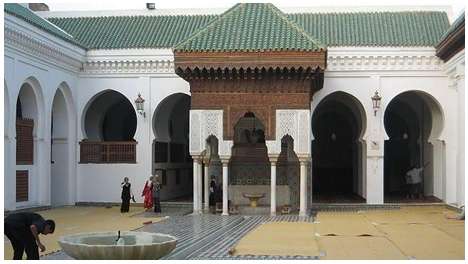
Fatima al-Fihri opened Al Quaraouiyine in 859 AD, and it is now considered the oldest continuously operating university in the world. Her institution was revolutionary not only for the fact that it existed, but also because of its purpose. Education offered at Al Quaraouiyine was free, inclusive, and comprehensive. Apart from Islamic theology and jurisprudence, students were also exposed to the fields of philosophy, science, mathematics, geography, grammar, poetry, and logic. Knowledge did not have any boundaries, it was nurtured.