~ Dr Uzma Khatoon
The intersection of modern wellness and traditional practices often sparks intense discussion, and recently, entrepreneur Namita Thapar found herself at the center of such a digital debate. Following the celebration of Eid, Thapar shared a video discussing the physical and mental health benefits she observed in the postures of Namaz. Drawing a parallel with Yoga, she suggested that movements like bowing and prostration could potentially improve posture, digestion, and stress management. As a leader in the healthcare industry, her objective was to bridge the gap between ancient rituals and modern fitness. However, this health-centric observation quickly escalated into a viral controversy.
The online reaction highlighted a deep polarization in public discourse. While many appreciated her attempt to find common ground in wellness, others reacted with skepticism, questioning the timing and intent of her post. Thapar faced weeks of harsh criticism and personal attacks that even targeted her family. After maintaining silence for nearly three weeks, she released a follow-up video to address the backlash. She emphasized that her perspective was rooted in her professional background in healthcare and a genuine interest in holistic well-being. She also pointed out the “selective outrage,” noting that her previous posts on traditions like Surya Namaskar had never faced such resistance.
Namita did not delete her video or back down. Instead, she asked people to focus on “Respect.” This controversy, though negative at first, ended up doing something good. It made people curious about the science behind traditional movements. It opened a door for a more professional and respectful discussion about how ancient rituals can actually be good for our modern, busy lives. In this article, we will look at how Namaz acts as a natural exercise and what specific benefits it offers for our body and mind.
The Science of Wellness: Namaz as a Holistic Exercise
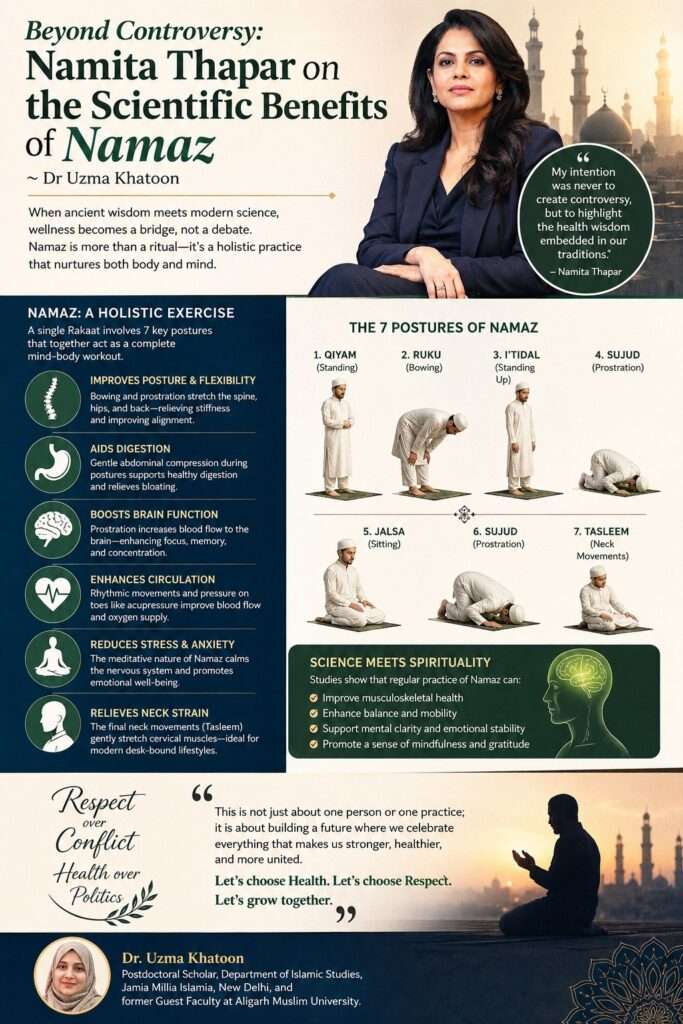
Beyond the immediate controversy, Thapar’s video has invited people to look at the physiological structure of Namaz through a scientific lens. When analyzed as a physical activity, Namaz consists of a sequence of gentle, rhythmic movements that offer a low-impact workout. A single unit of prayer, or Rakaat, involves seven distinct postures. For those who practice it regularly, this results in a consistent daily routine of physical activity. Scientific observations suggest that these movements act as a form of “light exercise,” which can be particularly beneficial for maintaining mobility in people of various age groups.
From a clinical perspective, the physical acts in Namaz may assist in maintaining joint flexibility and musculoskeletal health. The process involves a balanced cycle of muscle contraction and relaxation, which helps in keeping the body agile without the strain associated with intense gym environments. Some researchers have used goniometers to study these movements, finding that the range of motion achieved in the joints during prayer is comparable to several therapeutic stretching exercises. Furthermore, for elderly individuals or those with limited mobility, these structured movements can serve as a supplementary form of physical therapy by encouraging blood flow and muscle engagement.
The idea of Namaz as a holistic practice is supported by studies that compare its physical outcomes to those of Yoga or Pilates. It is seen as a natural method to keep the body active. For example, the standing posture (Qiyam) encourages an even distribution of body weight, which can help in reducing the pressure on the spine and improving balance. The rhythmic nature of the practice also has a calming effect on the nervous system. By viewing these practices through the framework of health science, we can appreciate how traditional rituals often incorporate movements that support long-term physical maintenance and well-being.
The Positive Impact: Physical and Mental Gains
When examining the specific health benefits, each posture in the prayer sequence appears to offer unique advantages for the body. The standing position aligns the frame, while the bowing position (Ruku) provides a significant stretch to the lower back, hips, and thighs. Medical experts often note that such controlled forward bending can help in maintaining spinal flexibility and may offer relief from common back tension. This posture also applies gentle pressure to the abdominal area, which is believed to support the digestive process and improve internal organ function over time.
One of the most discussed positions is the prostration (Sajda), where the head is placed lower than the heart. This position temporarily increases blood circulation to the brain, which many studies suggest can have a positive impact on cognitive functions like memory and concentration. It is also thought to stimulate the brain’s regulatory centers. However, it is important to note that like any physical activity, the benefits are most effective when performed with correct posture and may require caution for individuals with specific health conditions like high blood pressure. Additionally, the pressure applied to the toes during this act functions similarly to acupressure, which is often associated with improved circulation and relaxation.
The mental health aspect of these movements is perhaps as significant as the physical. The meditative focus required during the process helps in lowering stress and anxiety levels. Research into brain activity suggests that such structured practices can shift the body into a state of relaxation by balancing the autonomic nervous system. The concluding neck movements (Tasleem) also provide a gentle exercise for the upper cervical region, which can be highly beneficial for individuals who suffer from neck strain due to modern “desk-bound” lifestyles. Ultimately, the discussion sparked by Namita Thapar highlights that when we look past the controversy, there is a wealth of wisdom in traditional practices that can contribute to a more balanced and healthy life for everyone.
This entire episode is a reminder that our traditions are full of “wellness secrets” that can help everyone. Namita’s brave stance has inspired us to look beyond labels and appreciate the deep wisdom that connects us all. Her message is clear and beautiful: when we choose health over politics and respect over conflict, we all grow together. This is not just about one person or one practice; it is about building a future where we celebrate everything that makes us stronger, healthier, and more united. Namita Thapar has truly turned a small spark into a bright light of health and positivity for the whole society