Yusra Siddiqui| Awaz e khwateen | Posted by Tooba | Date 06-05-2026
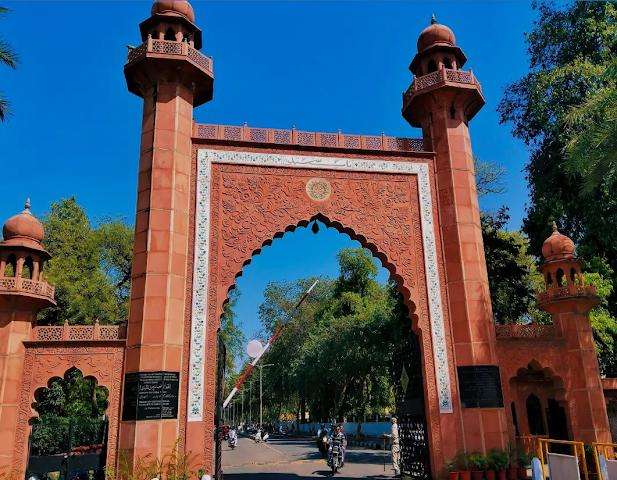
In a time when narratives around Muslim women are often shaped by stereotypes, it becomes essential to look beyond assumptions and engage with spaces where women are actively redefining their identities. Our recent visit to Aligarh Muslim University offered precisely such an opportunity an insight into how education is not just informing minds, but transforming lives. At the heart of this experience was the Advanced Centre for Women’s Studies, a space where knowledge, research, and lived realities intersect. Far from being confined to textbooks,
Women’s Studies here emerges as a dynamic discipline one that critically engages with issues of gender, justice, and social structures, particularly within marginalized communities.
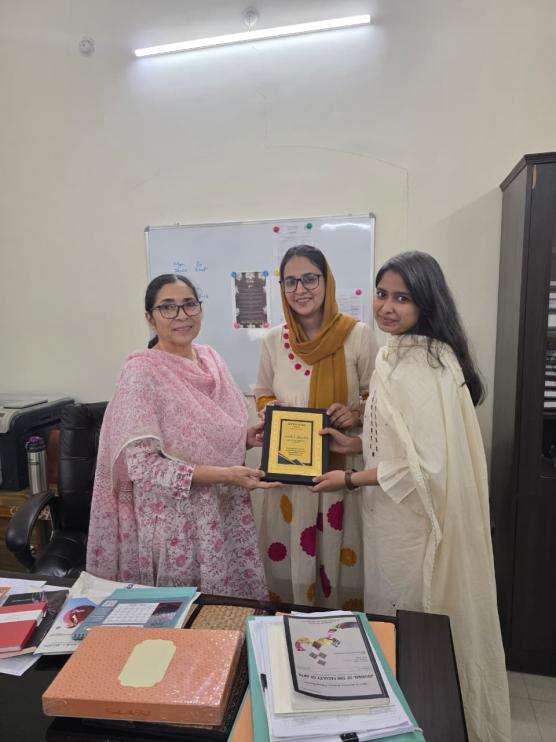
Our interaction with Azra Musavi, Director of the Centre, provided a deeper understanding of the role institutions can play in advancing gender justice. Under her leadership, the Centre has worked towards creating awareness, encouraging critical inquiry, and bridging the gap between academic research and societal needs. Her perspective highlighted an important truth: that empowerment cannot be reduced to mere access to education it must also reflect in agency, decision-making, and the ability to challenge structural barriers.
Walking through the Centre, engaging with faculty members, and listening to research scholars revealed a powerful narrative one of transformation. Teachers emphasized that education here is not limited to theoretical knowledge; it is designed to cultivate critical thinking and socialresponsibility. Students are encouraged to question, to analyse, and most importantly, to connect their learning with real-world challenges.
The voices of research scholars stood out as the most compelling aspect of this journey. Their work reflects a deep engagement with issues that are often overlooked ranging from gender-based violence to socio-economic inequalities. For many of them, choosing Women’s Studies is not just an academic decision, but a conscious step towards contributing to social change. Their journeys reflect resilience, awareness, and a growing confidence to articulate their experiences and aspirations.
The Centre’s environment further reinforces this transformation. The library, discussions, and collaborative spaces serve not only as academic resources but as platforms for dialogue and reflection. It is within these spaces that ideas take shape ideas that have the potential to influence both policy and practice.
This visit reaffirmed a core belief that drives our work: awareness is the first step towards empowerment. When women have access to knowledge, when they are provided with spaces to express themselves, and when their voices are taken seriously, meaningful change becomes possible.
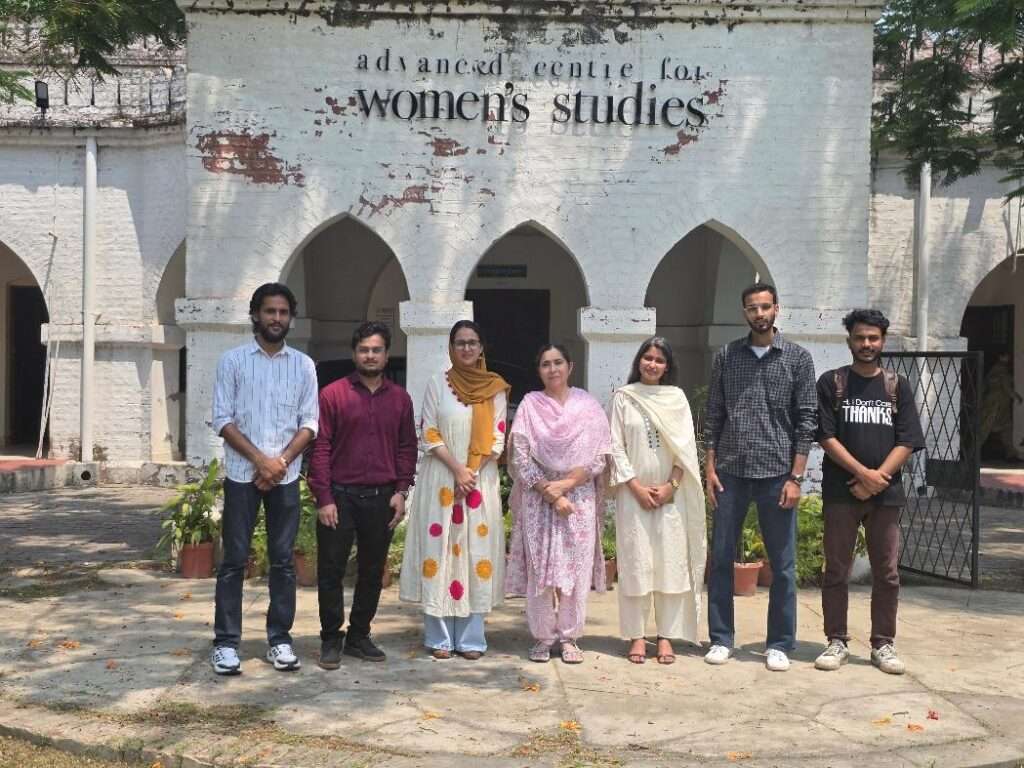
At Awaz e Khwateen, our aim has always been to amplify such voices and bring forward narratives that reflect strength, agency, and leadership. The Advanced Centre for Women’s Studies stands as a powerful example of how institutions can contribute to this vision by not only educating women, but by enabling them to question, to lead, and to transform their realities.
In the end, what we witnessed was not just an academic centre it was a movement in motion. A space where Muslim women are not waiting for change, but are actively creating it.