Tooba khatoon | New Delhi | 4 July 2026
“Every business begins with an idea. But for many women, it begins with courage.”
For generations, the entrepreneurial journeys of countless Muslim women have remained invisible not because they lacked talent, but because their work often stayed confined within the walls of their homes. From handcrafted products and traditional art to homemade skincare and jewellery, their skills have quietly supported families and preserved cultural heritage without receiving the recognition they deserved.
Today, that story is beginning to change.
Through its special coverage of women entrepreneurs, AwazeKhwateen met women whose journeys are not defined by extraordinary resources or privileged opportunities, but by resilience, creativity, and an unwavering determination to build something of their own. Their stories reveal that entrepreneurship is not merely about earning an income it is about reclaiming confidence, preserving identity, and creating opportunities for other women.
From Kashmir’s Handicrafts to Delhi’s Markets
For Tamseen khan, entrepreneurship was never part of the original plan.
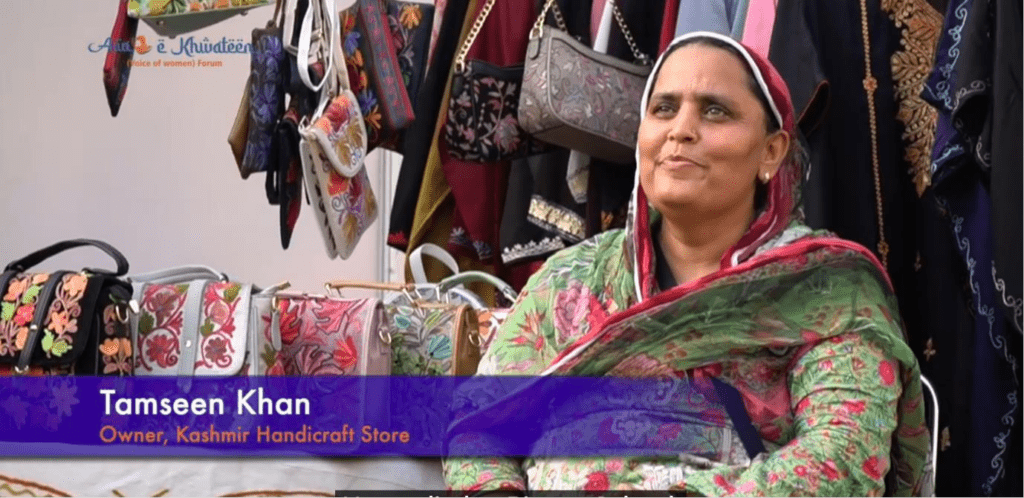
Tamseen khan belongs to Delhi and married into a family in Srinagar, Kashmir, she first encountered the intricate world of Kashmiri handicrafts after her marriage. Watching local
women patiently create beautiful hand-embroidered products inspired her to purchase a few pieces for her own home. What started as admiration soon became an opportunity.
She realised that these handcrafted products were appreciated far beyond Kashmir. Determined to connect local artisans with wider markets, she began exhibiting Kashmiri handicrafts at exhibitions and stalls in Delhi. Her venture became more than a business,it became a bridge between skilled women artisans in Kashmir and customers who valued authentic handmade craftsmanship.
“The biggest challenge for any homemaker is balancing the home, children, and work,” she explained. “I was fortunate that my family stood beside me. Their support gave me the confidence to begin again.”
Her story demonstrates that entrepreneurship can also be an act of community building, where success is measured not only by profit but by the number of women who grow together.
Creating Wellness from Home
Another inspiring entrepreneur, also named Rafia, transformed a personal interest in natural skincare into a flourishing business.
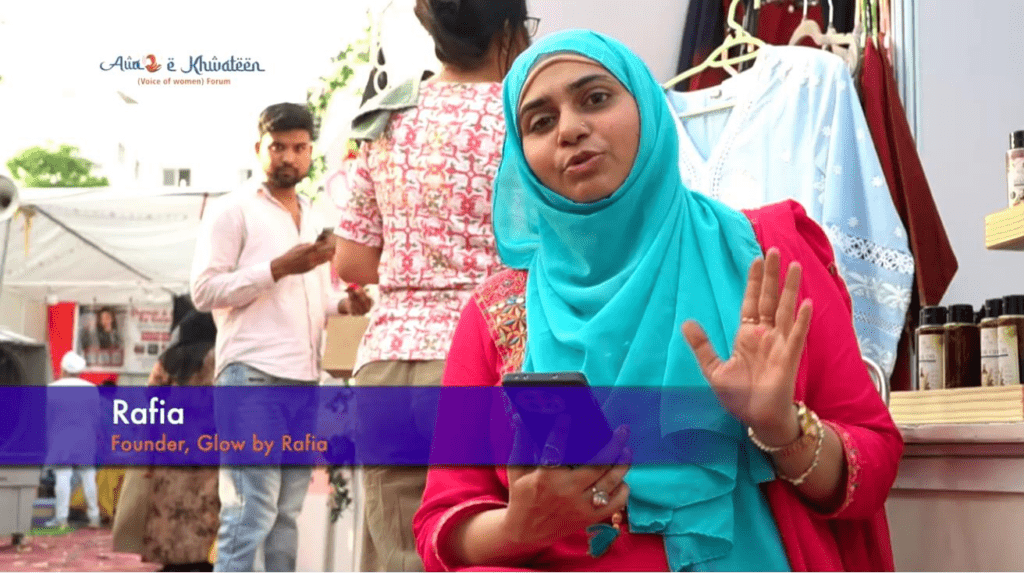
Before marriage, she worked in relationship management. After becoming a mother, she decided to pursue something that reflected her own passion creating plant-based skincare using traditional home remedies. Her brand, Glow by Rafia, offers handcrafted skincare products prepared with natural ingredients, including hibiscus-based hair care, cold-pressed herbal oils, and beetroot-infused cosmetic products.
Her entrepreneurial journey was interrupted by motherhood, but not ended by it. She paused her business after the birth of her child, only to restart it a few months later with renewed
determination. Within just a few months, strong customer response and repeat orders encouraged her not only to expand her product range but also to begin conducting skincare workshops. Her experience challenges the widespread belief that motherhood and entrepreneurship cannot coexist.
“The biggest challenge for any homemaker is balancing the home, children, and work,” she explained. “I was fortunate that my family stood beside me. Their support gave me the confidence to begin again.”
Behind every successful woman entrepreneur, she believes, there is often a family that chooses encouragement over limitation.
A Seventeen-Year-Old Who Turned Creativity into Confidence
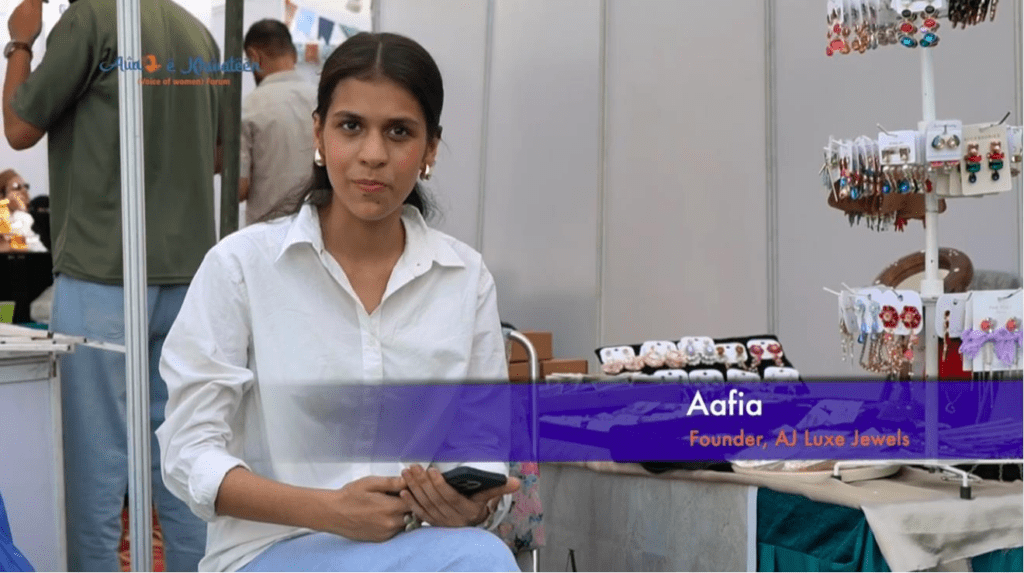
At just 17 years old, Afiya from Saharanpur represents a new generation of young entrepreneurs who are using digital platforms to transform hobbies into businesses. Her fascination with handmade crafts during childhood gradually evolved into jewellery designing. What began as an Instagram page created out of curiosity soon became a growing enterprise.
Learning techniques through YouTube tutorials and social media, she continuously improved her designs and expanded beyond handmade jewellery into a broader product range.Within a year, she had established a successful business while continuing her education in the Science stream.
“My studies and my business go together,” she said. “Girls should never stop pursuing their dreams, but education should always remain equally important.”
Her journey reflects how technology, when combined with determination and discipline, can create opportunities that were once unimaginable for young women.
The Invisible Labour Behind Every Small Business
Although each entrepreneur followed a different path, one common thread connected their stories. None spoke of overnight success.Instead, they described sourcing poor-quality raw materials, facing financial losses, learning to communicate with customers, managing household responsibilities, caring for children, and gradually building trust.
For many women, entrepreneurship begins after completing domestic responsibilities rather than before them. Business meetings happen between preparing meals.Packaging orders takes place after children go to sleep.Product photography is often done in living rooms instead of professional studios.
Their stories remind us that women’s entrepreneurship in India frequently grows alongside invisible and unpaid care work.
The Power of Family Support
Another recurring theme across these conversations was the role of family. Parents who encouraged creativity. Sisters who offered emotional support. Husbands who believed in new ideas. In-laws who looked after children so businesses could continue. These women repeatedly acknowledged that support systems matter. Entrepreneurship may be an individual journey, but its foundations are often built collectively.
Women Supporting Women
Perhaps the most powerful message came from entrepreneurs who had already begun supporting others. Rather than viewing business as competition, they saw it as collaboration. Some encouraged young girls to display their products at exhibitions. Others sourced handicrafts directly from women artisans. Several believed that experienced women have a responsibility to mentor younger women who hesitate to step into public spaces. “If I move forward,” one entrepreneur reflected, “my daughter will see that she can move forward too.”It is this cycle of encouragement that has the potential to create lasting social change.
Beyond Income: Building an Inclusive Economy
Women’s entrepreneurship contributes far beyond household income.It preserves traditional crafts, strengthens local economies, creates employment, promotes financial independence, and expands women’s participation in India’s economic growth.
Yet many small entrepreneurs continue to struggle with limited digital literacy, marketing opportunities, access to finance, and visibility.
This is where platforms like AwazeKhwateen play a meaningful role not simply by telling stories, butbyensuringthesewomenareseen,heard,andconnectedwith wider audiences. Recognition is often the first investment a woman entrepreneur receives.