By- Yusra Siddiqui| Update By- Ms Tooba
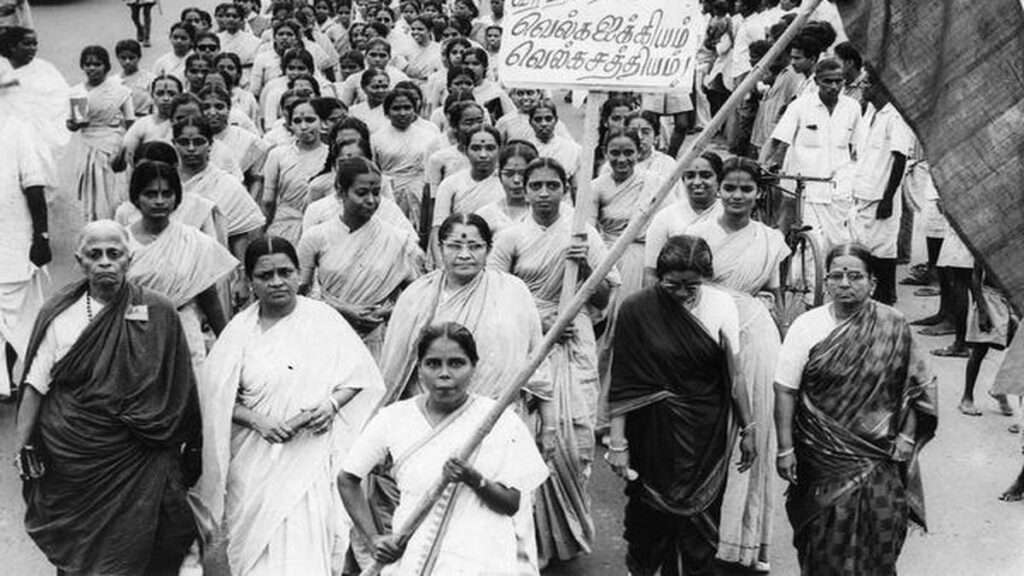
Every year, on 15 August, as the Indian Tricolour rises with pride and the nation celebrates its Independence, we remember the countless sacrifices that made freedom possible. We remember the revolutionaries who challenged colonial rule, the martyrs who gave their lives, and the millions of ordinary Indians who became part of an extraordinary struggle. But as we celebrate the freedom of our nation, there is another important question that deserves our attention: what was the role of women in India’s journey to independence, and what does independence truly mean for women today? The story of India’s freedom is incomplete without the stories of its women. Women were not merely witnesses to the freedom struggle; they were active participants, leaders, revolutionaries, organisers and voices of courage who stood firmly beside their fellow countrymen and women.
From Rani Lakshmibai and Begum Hazrat Mahal to Sarojini Naidu, Kasturba Gandhi, Aruna Asaf Ali and Usha Mehta, Indian women challenged colonial power with extraordinary courage. They participated in protests, Satyagraha, underground movements, revolutionary activities and social campaigns. They faced imprisonment, violence, social pressure and personal loss, yet they refused to step back. Begum Hazrat Mahal emerged as a powerful leader during the uprising of 1857, while Sarojini Naidu became one of the most prominent voices of India’s national movement. Aruna Asaf Ali played a significant role during the Quit India Movement, and Usha Mehta helped operate the secret Congress Radio, providing a powerful voice to the freedom movement at a time when the British attempted to control information. Their stories remind us that the struggle for India’s freedom was never only a man’s struggle. It was a collective struggle in which women played an indispensable role.
However, when we speak about independence today, we must look beyond the political freedom achieved in 1947. For women, the meaning of freedom goes much deeper. Freedom means having the opportunity to receive education, the confidence to express one’s opinion, the right to make informed decisions, access to justice, economic independence and the dignity to live without fear or discrimination. True independence means that a woman is recognised not merely as someone’s daughter, wife or mother, but as an individual with her own identity, aspirations, abilities and rights. A nation may become politically independent, but its progress remains incomplete if its women are unable to enjoy their rights fully.
India has travelled a remarkable distance since Independence. Women today are present in almost every sphere of national life. They are teachers, doctors, lawyers, scientists, entrepreneurs, administrators, journalists, artists, athletes, social workers, researchers and leaders. They are contributing to the economy, shaping families, educating future generations and strengthening communities. Millions of women are also working quietly behind the scenes, often without recognition, carrying responsibilities that are essential to the functioning of families and society. Their contribution is nation-building, and their progress is India’s progress. When a woman becomes educated, an entire family gains knowledge. When a woman becomes economically empowered, an entire household gains strength. When a woman becomes aware of her rights, injustice becomes harder to hide.
Yet, despite this progress, many women continue to face barriers that prevent them from experiencing the full meaning of independence. Lack of awareness, social discrimination, violence, economic dependence, limited access to education and employment, and deeply rooted stereotypes continue to affect women’s lives. This is why the idea of independence must evolve. The struggle today is not against a foreign ruler; it is against every form of inequality that prevents a woman from living with dignity and making choices about her own life. The next freedom struggle is a struggle for awareness, equality, opportunity and empowerment.
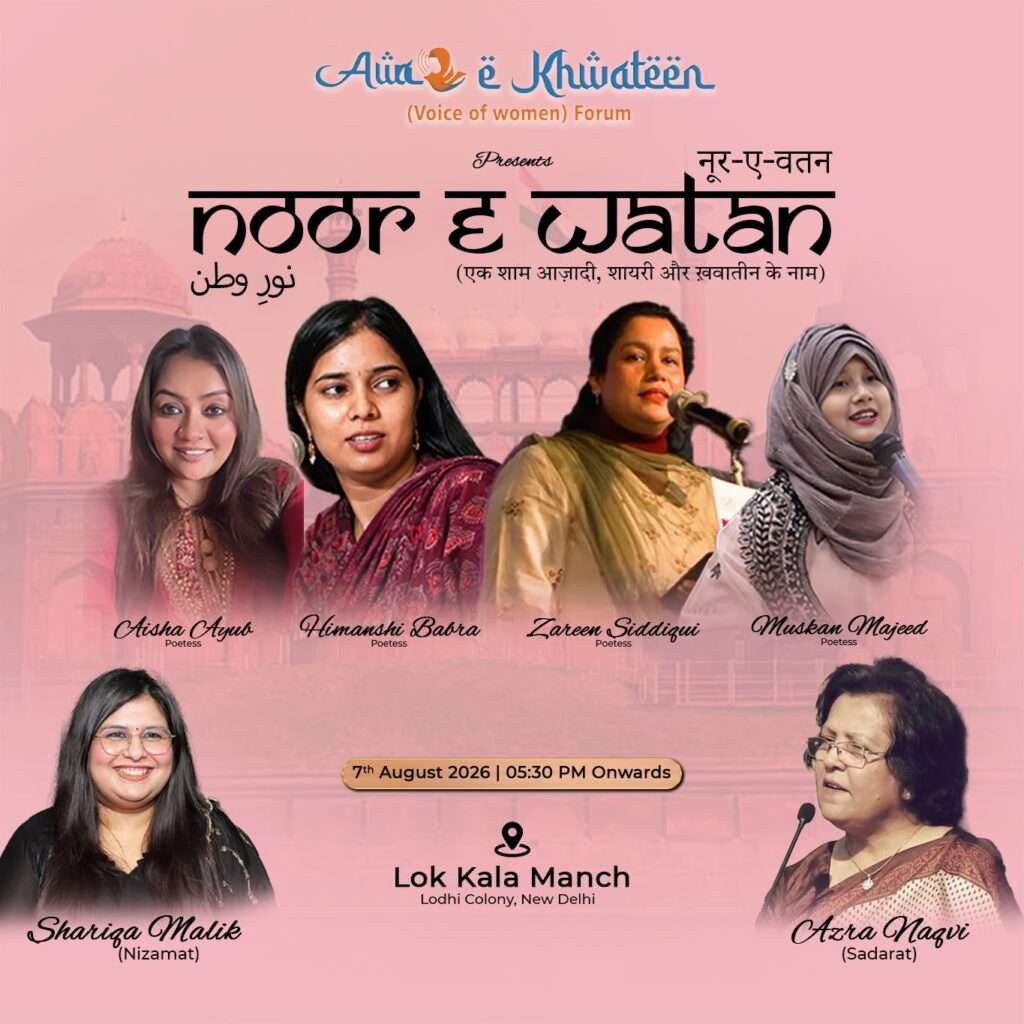
At this point, the role of platforms like Awaz-e-Khwateen becomes especially important. Awaz-e-Khwateen believes that empowerment begins with awareness. A woman who knows her rights is better equipped to protect herself. A woman who has access to knowledge can make informed decisions. A woman who understands her legal, social and constitutional rights can challenge injustice instead of silently accepting it. Through conversations, awareness programmes, field activities, discussions and digital outreach, Awaz-e-Khwateen seeks to create a space where women can speak, learn, question and participate. The purpose is not simply to talk about women’s problems, but to make women’s voices stronger and more visible in society.
Independence Day therefore gives us an opportunity not only to remember the women who fought for India’s freedom but also to recognise the women who are shaping India’s future. A woman educating her daughter, a girl pursuing higher education, a woman starting a business, a lawyer helping another woman understand her rights, a teacher encouraging a young girl to dream, or a woman speaking against injustice each of these acts represents a continuation of the spirit of freedom. Patriotism is not limited to standing beneath the national flag; it is also about building a country where every citizen can live with dignity and opportunity.
We must also remember the countless women whose names may never appear in history books. During the freedom struggle, thousands of women participated in movements, supported families, sheltered activists, spread messages, joined protests and endured sacrifices. Their contributions may not always have received the recognition they deserved, but their courage formed an important part of India’s journey towards independence. Remembering them is not simply an act of looking back at history; it is a reminder that ordinary women can create extraordinary change when they are given the courage and opportunity to act.
This Independence Day, therefore, let us ask ourselves some deeper questions. Are our daughters free to dream without limitations? Are women aware of their rights? Can every woman access education and economic opportunities? Does every woman feel confident enough to speak when she faces injustice? Are we creating an environment where girls are raised with courage rather than fear? These questions do not weaken our celebration of Independence; they give it greater meaning. Because the real tribute to those who fought for India’s freedom is not simply to remember their sacrifices once a year, but to continue building the India they dreamed of.
The first generation of freedom fighters fought for a free India. Our generation must work towards an empowered India. An India where a girl’s ambitions are not considered too big, where a woman’s voice is respected, where education is seen as a right rather than a privilege, where women can participate equally in social and economic development, and where every daughter grows up believing that her future is limited only by her imagination not by society’s expectations.
For Awaz-e-Khwateen, the message this Independence Day is simple but powerful: the freedom of a nation and the empowerment of its women are deeply connected. A nation becomes stronger when its women become stronger. A society moves forward when its women are heard. Families become more resilient when women are educated and empowered. And democracy becomes more meaningful when every citizen, including every woman, knows that her voice matters.
This Independence Day, let us honour the women who fought for India’s freedom, celebrate the women who are transforming India today, and commit ourselves to creating a future where every woman can live with dignity, knowledge, confidence and choice. Because independence is not merely the freedom of a flag to fly; it is the freedom of every individual beneath that flag to live with dignity.